As the global energy industry accelerates toward decarbonization, CO₂ separation units have become critical process systems for capturing carbon dioxide from industrial gas streams. These units isolate CO₂ from complex mixtures such as post-combustion flue gas, pre-combustion syngas, and biogas. The result is a high-purity CO₂ stream, typically compressed to around 100 bar for transport to carbon capture and storage (CCS) or utilization facilities.
Core separation technologies
Modern CO₂ separation units rely on several proven technologies, each optimized for specific feed gas conditions and capture requirements.
Chemical absorption remains the most mature approach, using liquid solvents such as monoethanolamine (MEA) to capture CO₂ through exothermic reactions in absorber towers. These systems reliably achieve capture rates above 90% from low-pressure flue gas. The trade-off is a significant energy penalty, driven by the high-temperature regeneration needed to recover the solvent, together with challenges such as solvent degradation and equipment corrosion.
Adsorption-based systems use solid sorbents, often deployed in counter-current fluidized bed configurations. Through temperature or pressure swing cycles, they regenerate the sorbent with substantially less energy than amine systems. Pilot programs have scaled these designs from bench scale up to commercially relevant capacities, confirming their readiness for industrial use. Their compact footprint makes them well suited to modular applications, although sorbent durability under contaminant exposure calls for careful material selection.
Membrane separation is an increasingly attractive option for high-pressure duties, particularly pre-combustion syngas treatment in integrated gasification combined cycle (IGCC) facilities. Polymeric, inorganic, and hybrid membrane modules, often configured as hollow fiber bundles, enable selective CO₂ permeation while maintaining a high CO₂ partial pressure, which keeps compression energy low. These systems are valued for their simplicity and flexibility, with relatively low energy penalties, although selectivity under reducing atmospheres and water vapor management remain active development areas.
Industrial applications
CO₂ separation units serve important functions across many sectors. In power generation, they enable post-combustion capture from fossil-fired plants as well as pre-combustion separation during hydrogen production at IGCC facilities. Natural gas processing and biogas upgrading operations use these units to remove CO₂, meet pipeline specifications, and raise the calorific value of the product gas. Industrial emitters such as cement plants, steel mills, and refineries increasingly add CO₂ capture for end-of-pipe treatment, both to comply with frameworks such as the EU Emissions Trading System and to qualify for the carbon capture incentives now available in many markets.
The modular advantage
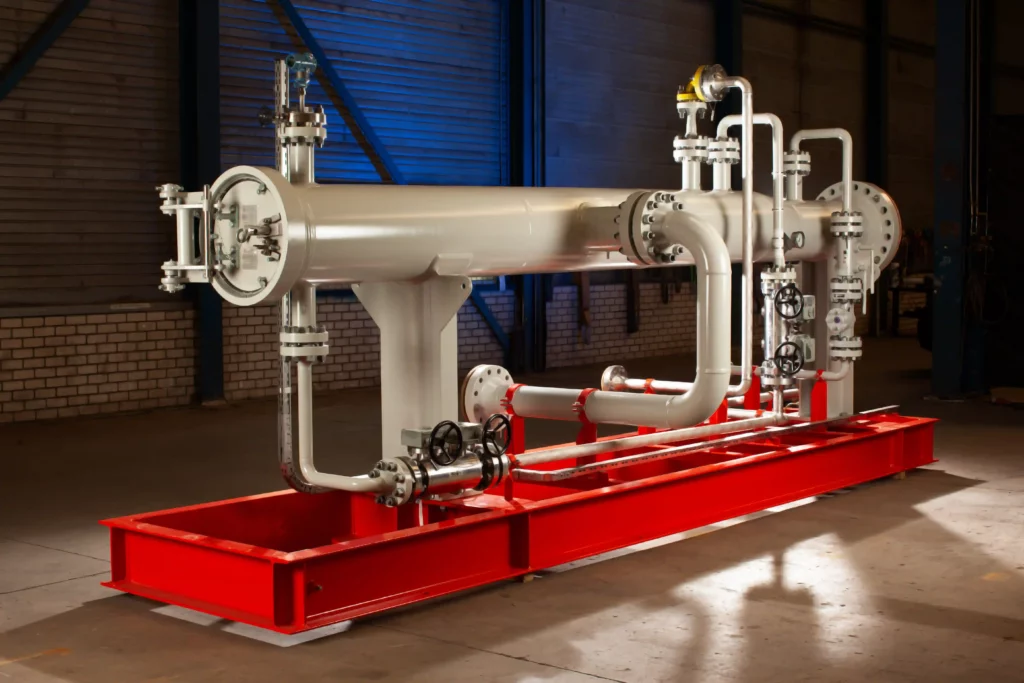
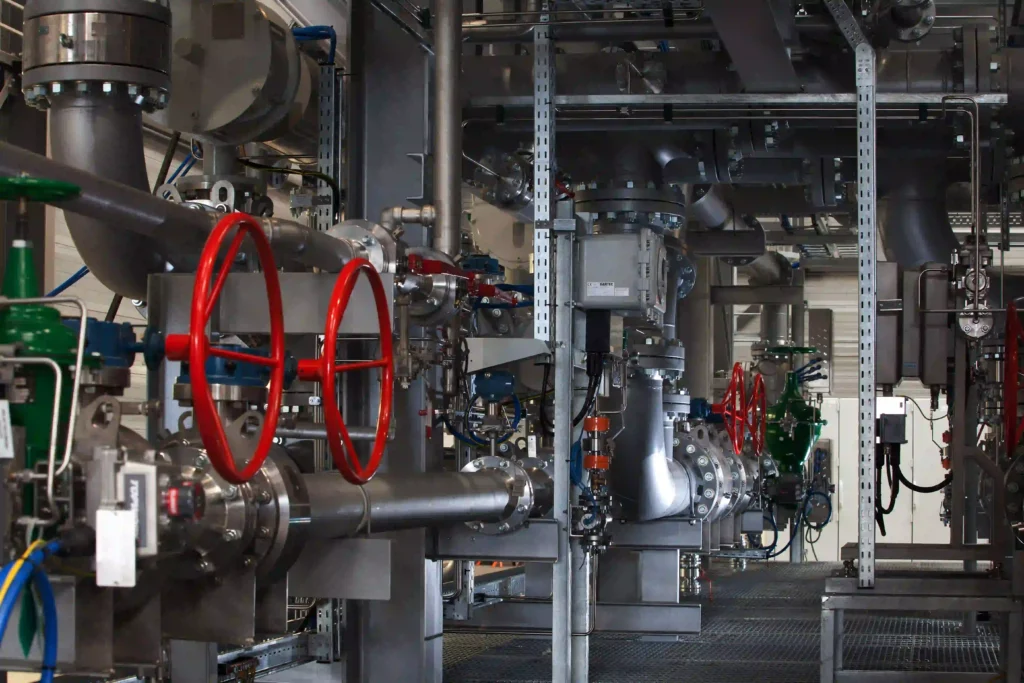
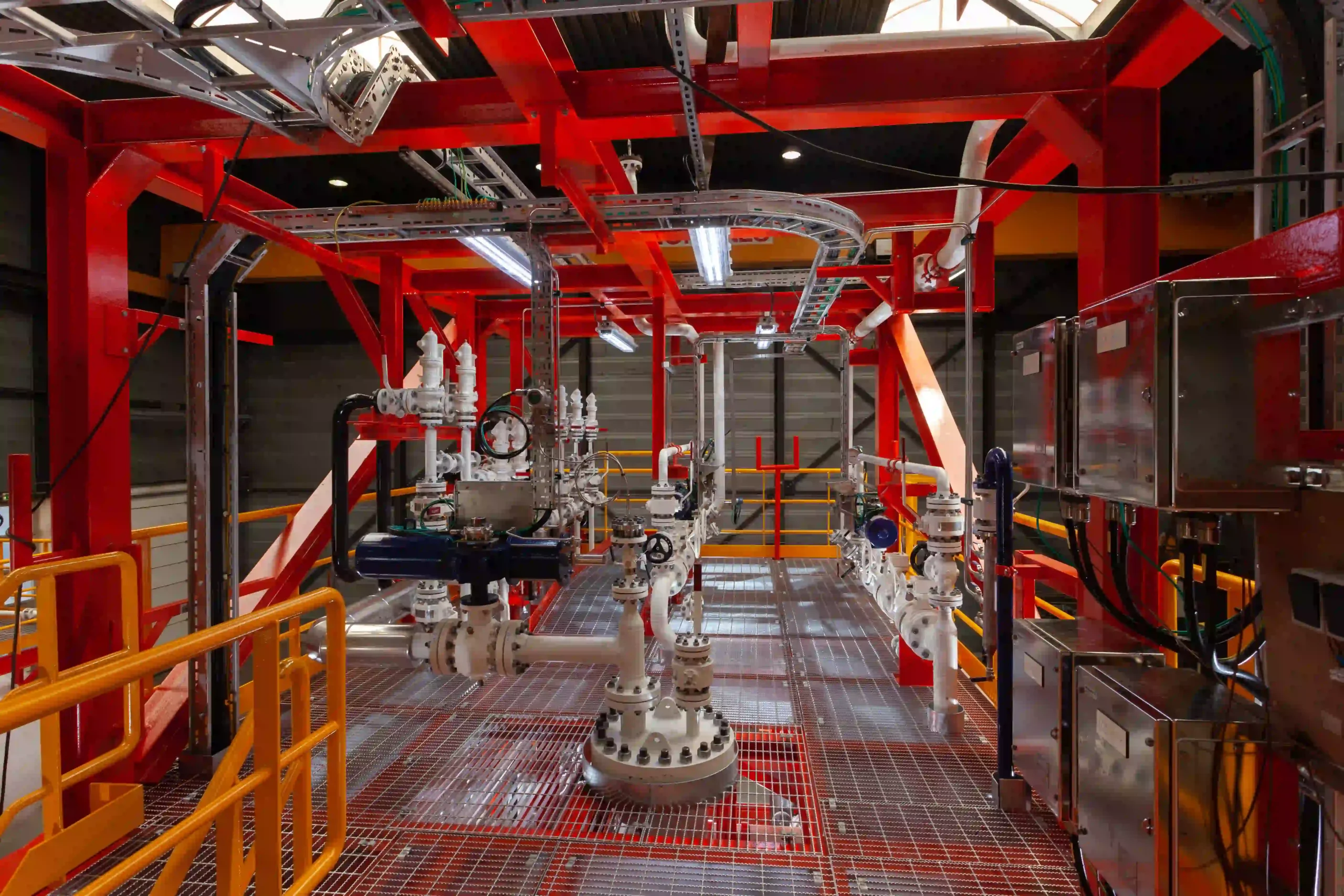
The shift toward skid-mounted, pre-fabricated CO₂ separation units directly addresses the industry’s need for rapid deployment and capital efficiency. By integrating membrane bundles or compact fluidized-bed adsorbers into a single skid, modular designs cut on-site construction time and cost substantially compared with traditional field-erected plants. Because the package, including compression equipment, is assembled and tested in the workshop, it can undergo factory acceptance testing before shipment. This de-risks project execution and is particularly valuable for remote gas fields, distributed biogas facilities, and power plant retrofits where on-site resources are limited.
This is where FB Group adds value. As a system integrator, FB Group combines proven separation technologies from specialist suppliers with its own engineering and steel construction expertise, delivering factory-tested, plug-and-play modules that arrive ready for installation on site.
Conclusion
CO₂ separation units are essential infrastructure for meaningful industrial decarbonization. As projects target high capture rates while keeping energy penalties as low as possible, the move toward modular solutions continues to shorten deployment timelines. For process engineers and project developers, choosing the right technology, whether absorption, adsorption, or membrane-based, calls for a careful techno-economic assessment of feed gas composition, pressure conditions, contaminant profiles, and lifecycle costs. The goal is to optimize both environmental performance and economic viability in the energy transition.