As global industries face mounting pressure to reduce carbon emissions, carbon capture, utilization, and storage (CCUS) has emerged as a critical technology suite for achieving decarbonization targets. CCUS encompasses the capture of carbon dioxide (CO₂) from industrial processes or power generation, its transport to suitable locations, and either permanent geological storage or utilization in value-added products. For process engineers working in high-emission sectors, understanding CCUS fundamentals is essential for implementing effective emission reduction strategies.
The three stages of CCUS technology
CCUS operations divide into three distinct technical stages, each with specific engineering requirements.
Capture separates CO₂ from flue gases using three primary methods: post-combustion capture employs amine solvents that chemically bind CO₂ before thermal regeneration releases concentrated gas; pre-combustion capture uses gas reforming to produce separate CO₂ and hydrogen streams; and oxy-combustion burns fuel in pure oxygen to generate CO₂-rich exhaust. Direct air capture (DAC) represents an emerging fourth approach, extracting CO₂ directly from ambient air. Modern capture systems achieve 85-95% efficiency with CO₂ purity exceeding 95%, though they impose a 10-40% energy penalty on plant output, a critical consideration for process design and economic viability.
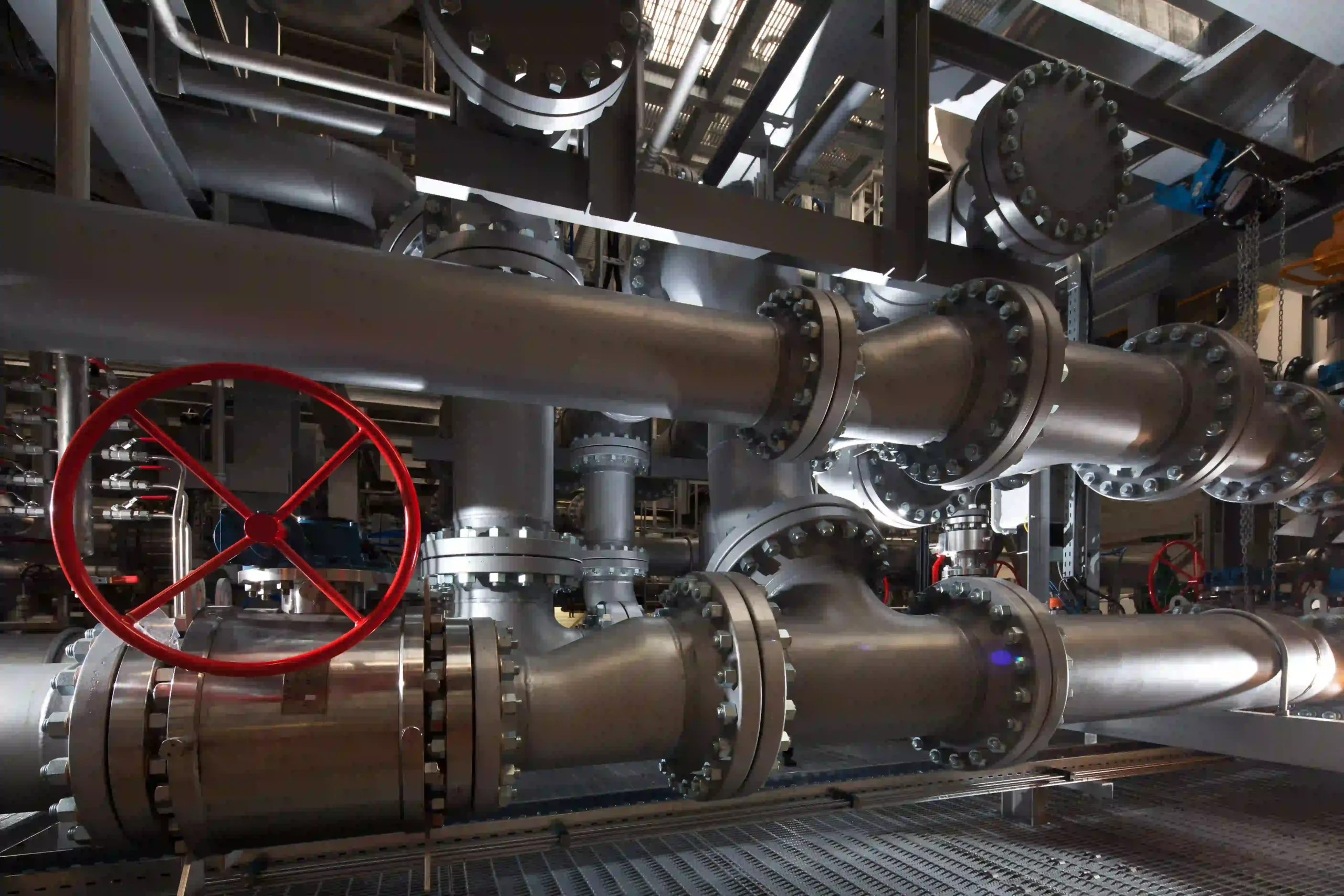
Transport requires compressing captured CO₂ to a supercritical state for efficient movement through dedicated pipelines. Dedicated CO₂ pipeline networks are already in operation in several regions worldwide, with additional transport via ships, trucks, and rail for smaller volumes or offshore applications. Proper dehydration and purification prevent corrosion in transport systems, demanding careful materials selection and stringent process control.
Storage and utilization represent the final stage. Permanent storage injects CO₂ into deep geological formations such as saline aquifers and depleted oil and gas reservoirs at depths exceeding one kilometer, where structural, residual, and solubility trapping mechanisms ensure long-term containment. Alternatively, utilization converts CO₂ into products including synthetic fuels, chemicals, and construction materials. Enhanced oil recovery (EOR) currently accounts for approximately 80% of captured CO₂, where injection both extracts additional oil and permanently stores most of the injected gas underground, creating economic incentives that improve project feasibility.
Applications across process and energy industries
In process engineering, CCUS integrates into high-emission facilities including natural gas processing plants, refineries, cement kilns, steel mills, and chemical production units. The energy sector deploys CCUS at coal and gas-fired power plants and hydrogen production facilities. When combined with bioenergy (BECCS), CCUS achieves net-negative emissions by capturing and storing CO₂ that biomass originally absorbed from the atmosphere during growth.
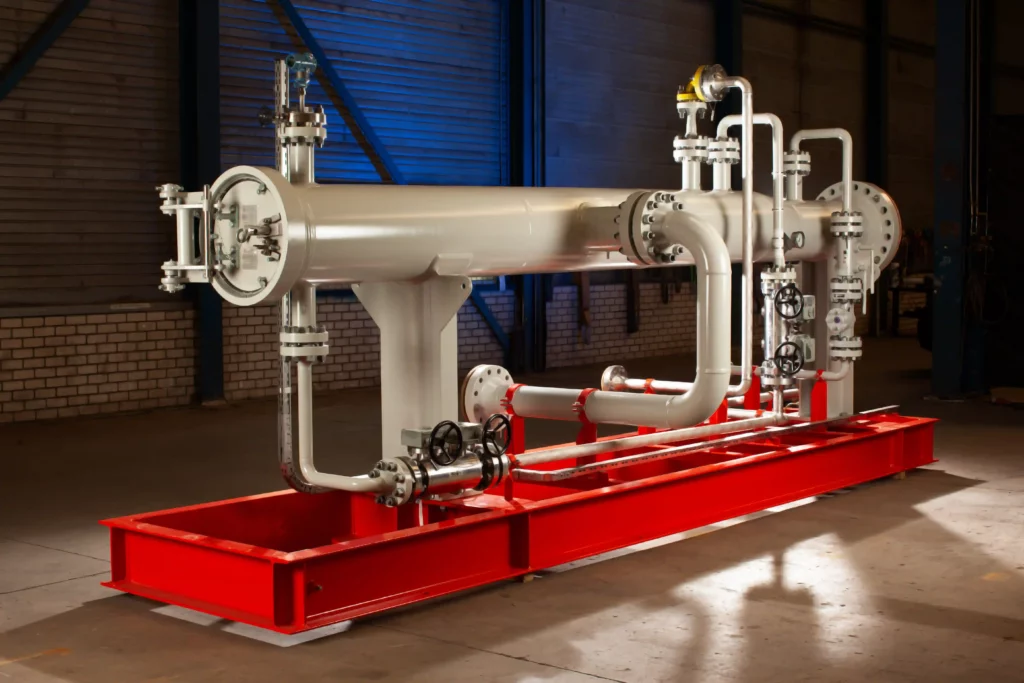
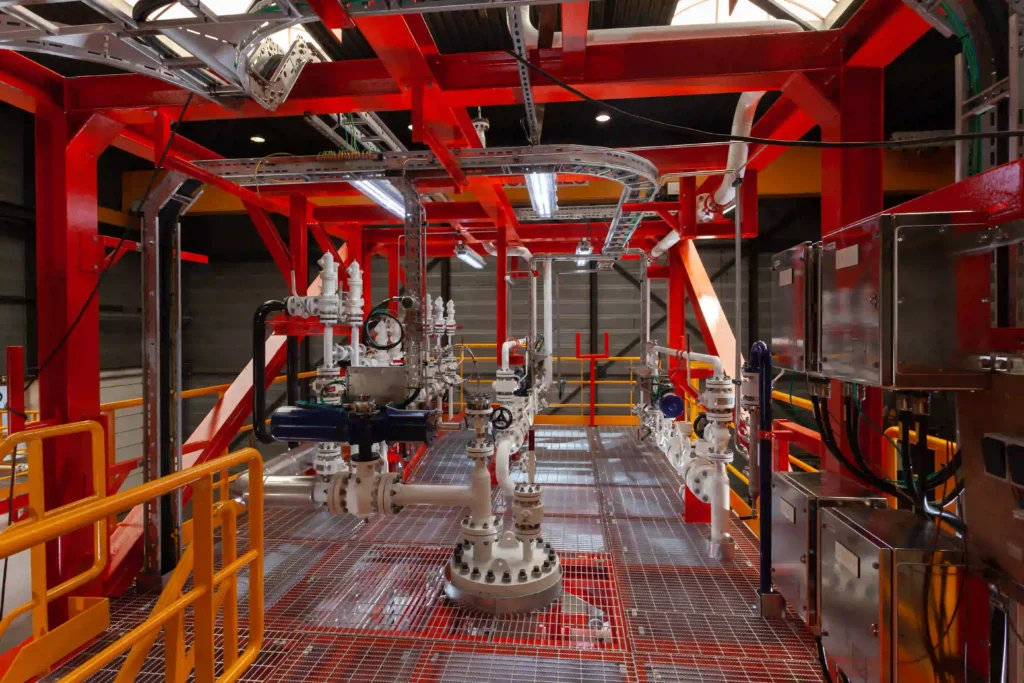
Modular, skid-mounted CCUS systems offer significant advantages for retrofitting existing facilities. Pre-fabricated units, including amine-based absorbers, multi-stage compressors, and molecular sieve dehydrators, install as plug-and-play, bolt-on modules that minimize plant downtime while enabling scalable, phased deployment that is particularly valuable at remote energy sites. As a system integrator, FB Group designs and assembles such packages by combining proven components from specialist suppliers into factory-tested, skid-mounted units, reducing on-site installation work and project risk.
Critical design and operational parameters
Successful CCUS implementation requires addressing multiple technical factors. Design teams must optimize solvent selection to minimize energy penalties, specify corrosion-resistant alloys for CO₂ service (particularly when impurities like H₂S are present), and balance high capital costs against operational savings. Operational priorities include maintaining CO₂ stream purity to prevent unwanted chemical reactions, implementing continuous leakage monitoring through seismic and pressure tracking, and verifying geological storage integrity through site-specific assessments of caprock seals and reservoir characteristics.
While no unified global standard exists, the IPCC provides technical definitions, the American Bureau of Shipping (ABS) offers guidelines for maritime CCUS chains, and the UNFCCC promotes deployment for climate goals. Regulatory frameworks leverage existing infrastructure while requiring rigorous monitoring protocols for injection sites.
Conclusion
CCUS represents an indispensable tool for industrial decarbonization, enabling process-intensive industries to meet climate commitments while maintaining operational continuity. As modular solutions mature and policy support strengthens through carbon pricing mechanisms, CCUS will play a central role in the global energy transition, bridging the gap between current fossil fuel infrastructure and a low-carbon future.