As industries worldwide face mounting pressure to reduce carbon emissions, carbon capture and storage (CCS) has emerged as a critical technology bridging current operational realities with future sustainability targets. For process engineers, understanding CCS fundamentals is essential to implementing effective decarbonization strategies across power generation and heavy industrial sectors.
The three-phase CCS process
Carbon capture and storage operates as an integrated system designed to prevent CO₂ from reaching the atmosphere. The IPCC defines CCS as separating a relatively pure CO₂ stream from industrial sources, conditioning and compressing it, then transporting it for permanent geological isolation.
Capture technologies employ three established methods. Post-combustion capture removes CO₂ from flue gases after fuel combustion using chemical absorption, typically amine-based solvents that bind CO₂ molecules. This approach is particularly valuable for retrofitting existing power plants and industrial facilities. Pre-combustion capture partially gasifies fossil fuel to produce synthesis gas, extracting CO₂ before combustion while generating hydrogen as a marketable by-product. Oxy-combustion represents a third specialized option for specific applications.
The capture process follows a regeneration cycle: CO₂-rich solvent is heated to release the captured gas, which then undergoes conditioning to remove impurities and achieve specifications for compression. The regenerated solvent returns to the capture system, creating a continuous closed-loop operation.
Transportation and geological storage
Compressed CO₂ is transported via pipeline, the most economical and reliable method for large-scale deployment. Decades of pipeline operation, much of it serving enhanced oil recovery (EOR) operations, demonstrate the proven technical maturity of large-scale CO₂ transport. For offshore applications or remote locations, ship transport provides an alternative solution.
Permanent storage occurs in deep geological formations including saline aquifers, depleted oil and gas reservoirs, unmineable coal seams, and basalt formations. CO₂ is injected beneath impermeable caprock layers that provide containment. Rigorous geological characterization and continuous monitoring protocols ensure long-term storage integrity and verify that CO₂ remains permanently isolated from the atmosphere.
Engineering considerations for modular CCS systems
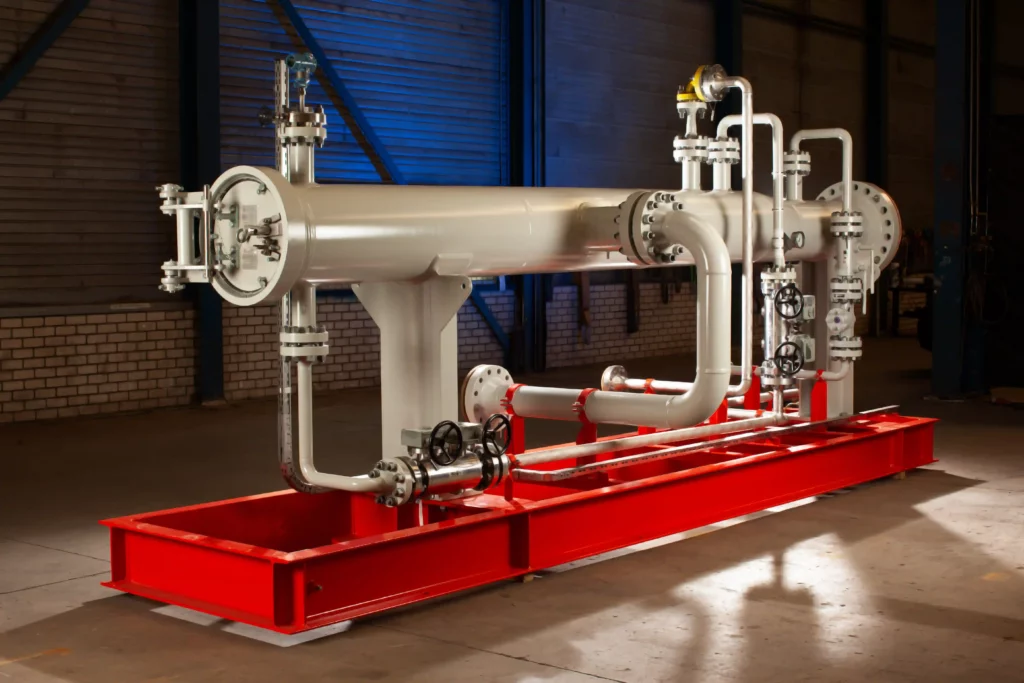
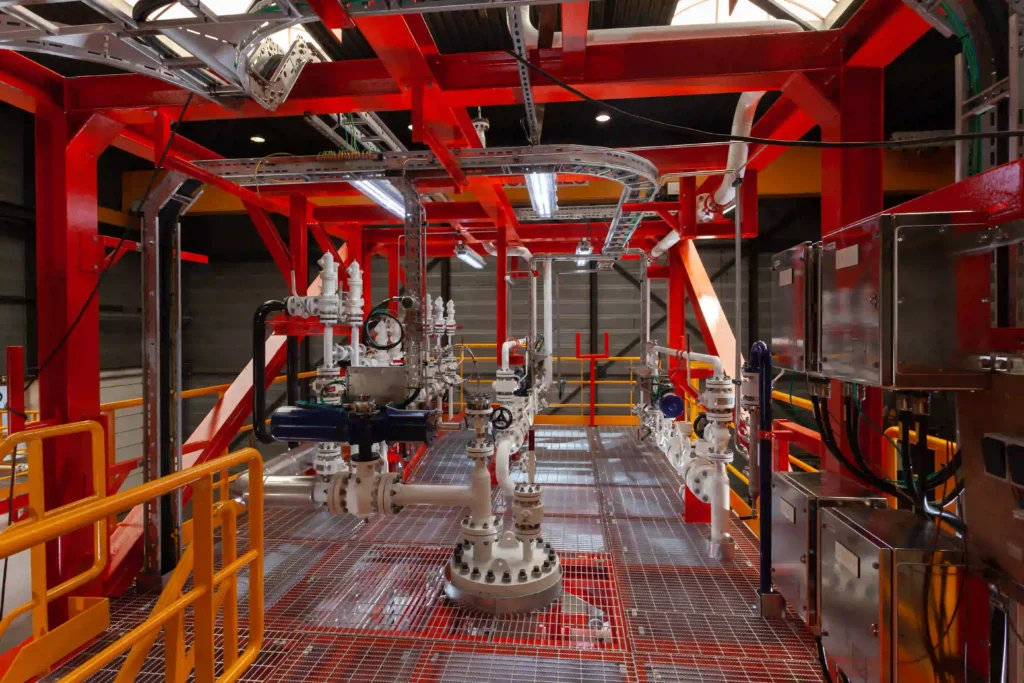
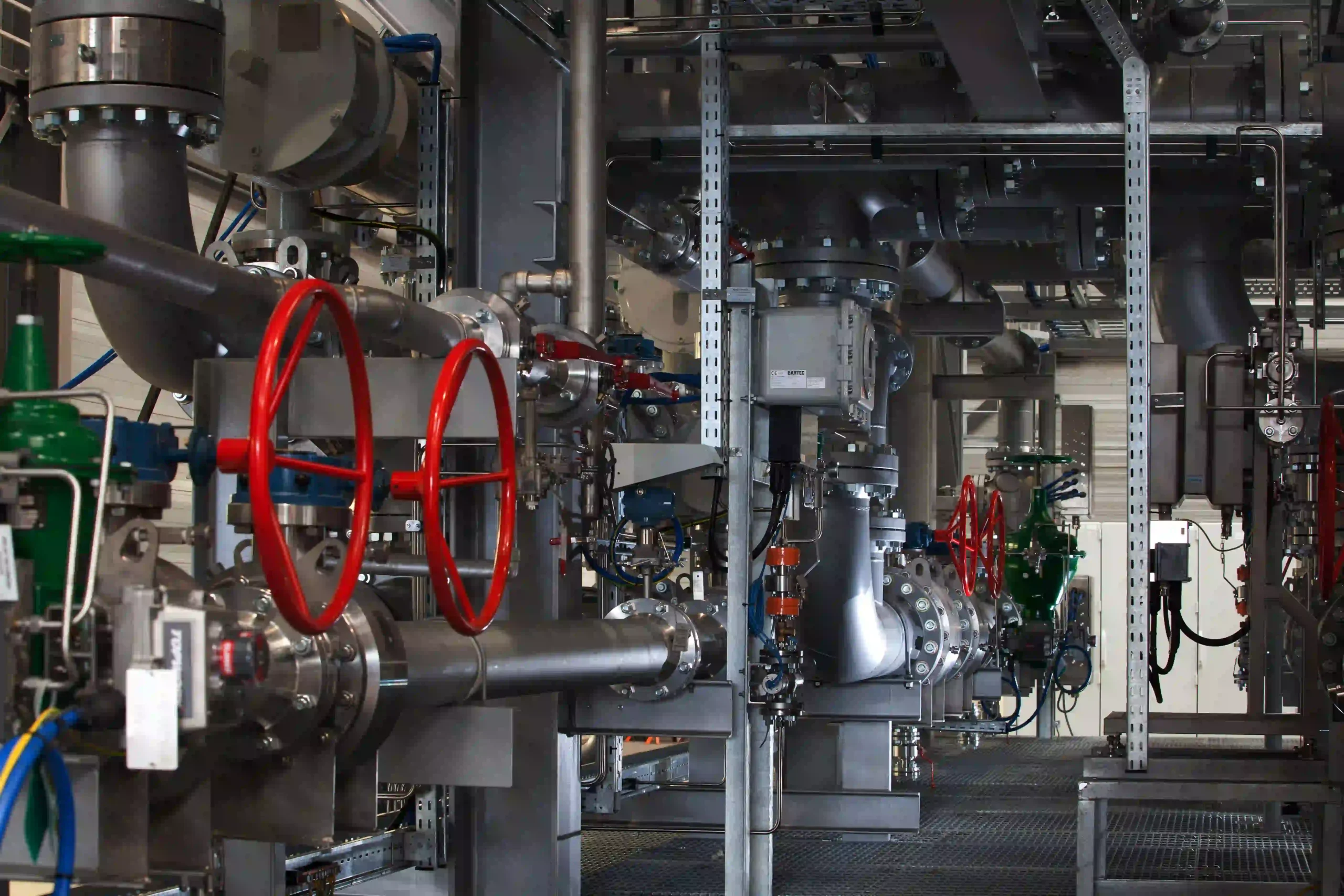
CCS technology aligns naturally with modular, skid-mounted configurations. The distinct process stages (chemical separation, compression, conditioning, and monitoring) can be integrated into pre-fabricated, factory-tested skid-mounted units adaptable to diverse industrial point sources including cement plants, steel mills, hydrogen production facilities, and power stations. This plug-and-play approach shortens installation time on site and de-risks delivery.
However, energy consumption represents a critical design parameter. Capturing and compressing CO₂ imposes a significant parasitic load: the energy drawn by the separation, regeneration, and compression steps reduces a plant’s net output and raises its fuel consumption per unit of useful energy. This energy penalty is one of the defining economic challenges of CCS and drives demand for optimized modular designs that maximize separation efficiency while minimizing compression and regeneration energy requirements.
Market outlook and strategic positioning
CCS represents an indispensable decarbonization pathway for industries dependent on fossil fuel infrastructure or process emissions. Advanced variants including BECCS (bioenergy with CCS) and DACS (direct air capture and storage) expand the technology’s application scope beyond traditional point sources.
As carbon pricing mechanisms expand and regulatory frameworks tighten globally, demand for proven, scalable CCS solutions will accelerate. For modular system integrators, CCS offers a compelling value proposition: leveraging established chemical separation principles within pre-engineered, skid-mounted configurations to deliver measurable emissions reductions. As deployment costs decline through technological maturation and economies of scale, CCS will increasingly define competitive advantage in the industrial decarbonization market.