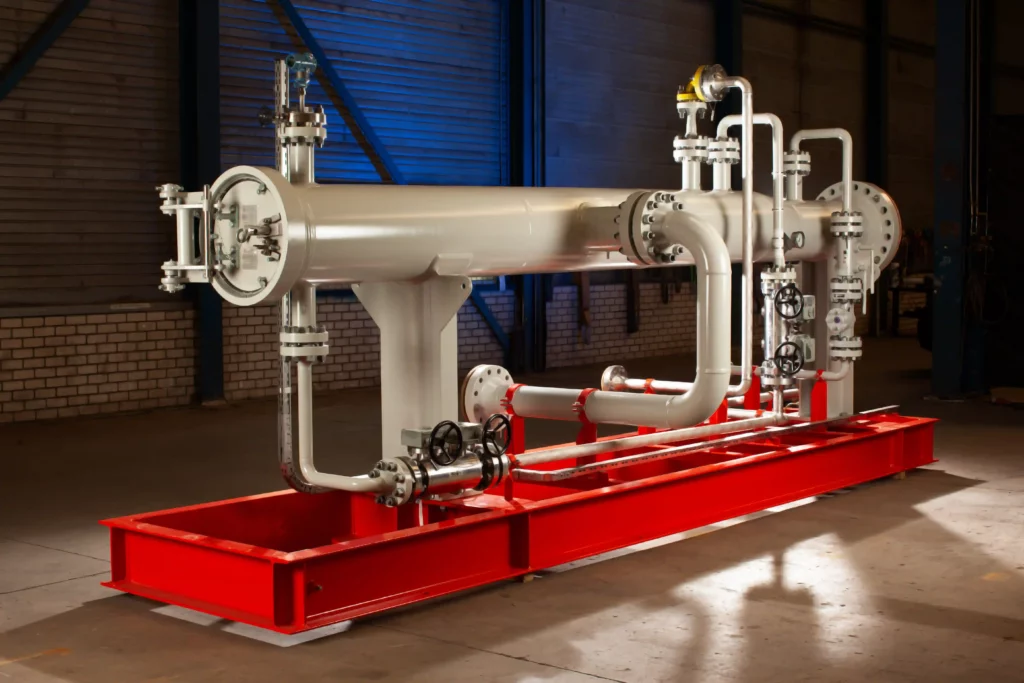
In processing operations, managing water quality is critical to maintaining equipment integrity and meeting environmental standards. A water filtration unit is a skid-mounted or modular system engineered to remove solid particulates, entrained liquids, and contaminants from produced water, wastewater, or process water streams. These units protect downstream equipment-including pipelines, glycol contactors, and NGL recovery systems-from corrosion and fouling while ensuring that discharge or reuse specifications are met.
Technical Operation and Key Characteristics
Water filtration units employ multi-stage filtration technology to achieve comprehensive contaminant removal. The typical configuration includes coalescers for aerosol separation, cartridge filters, depth filters with pleated synthetic or fibrous media, and membrane systems capable of removing particles down to 0,1-1 µm. For specialized applications requiring sterilization of process water or associated gas streams, hydrophobic membranes such as PTFE at 0,22 µm can be integrated into the system.
These units are designed to operate under demanding conditions, with design pressure ratings typically ranging from 10 to 40 bar depending on upstream compression stages, and operating temperatures up to 120°C for high-temperature applications using inorganic filter media. Flow capacity is customized to process requirements, with modular units in gas plants typically handling flows from 10 to 500 m³ per day. Critical operational parameters include differential pressure monitoring-typically maintained between 0,5 and 2,0 bar across filter elements-which provides early indication of fouling and signals when media replacement is required, generally every 6 to 12 months.
Modular integration by FB Group
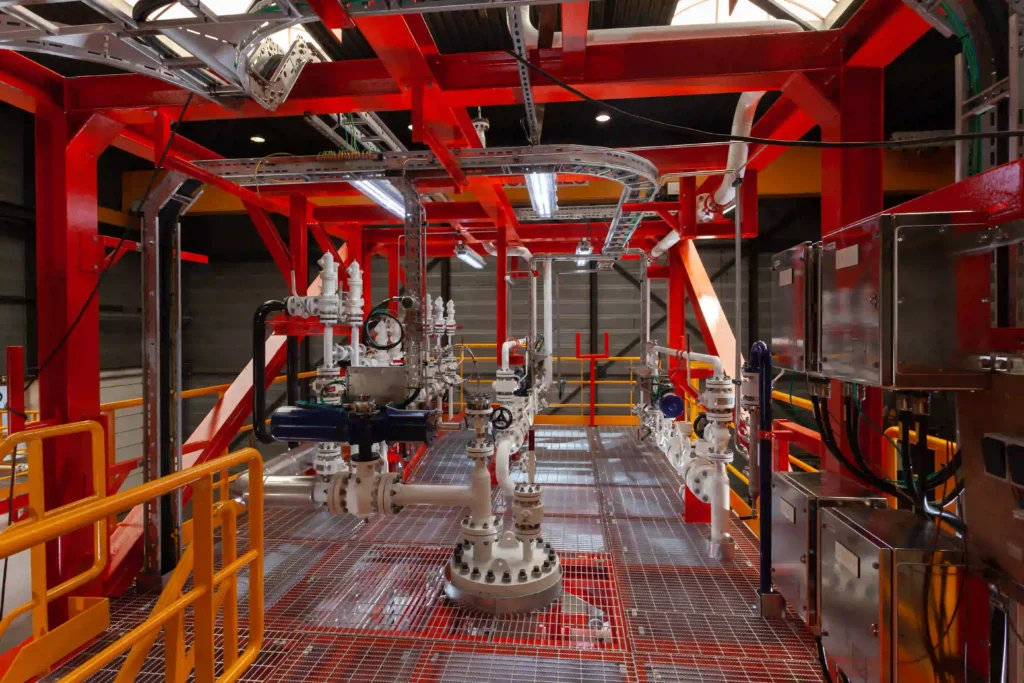
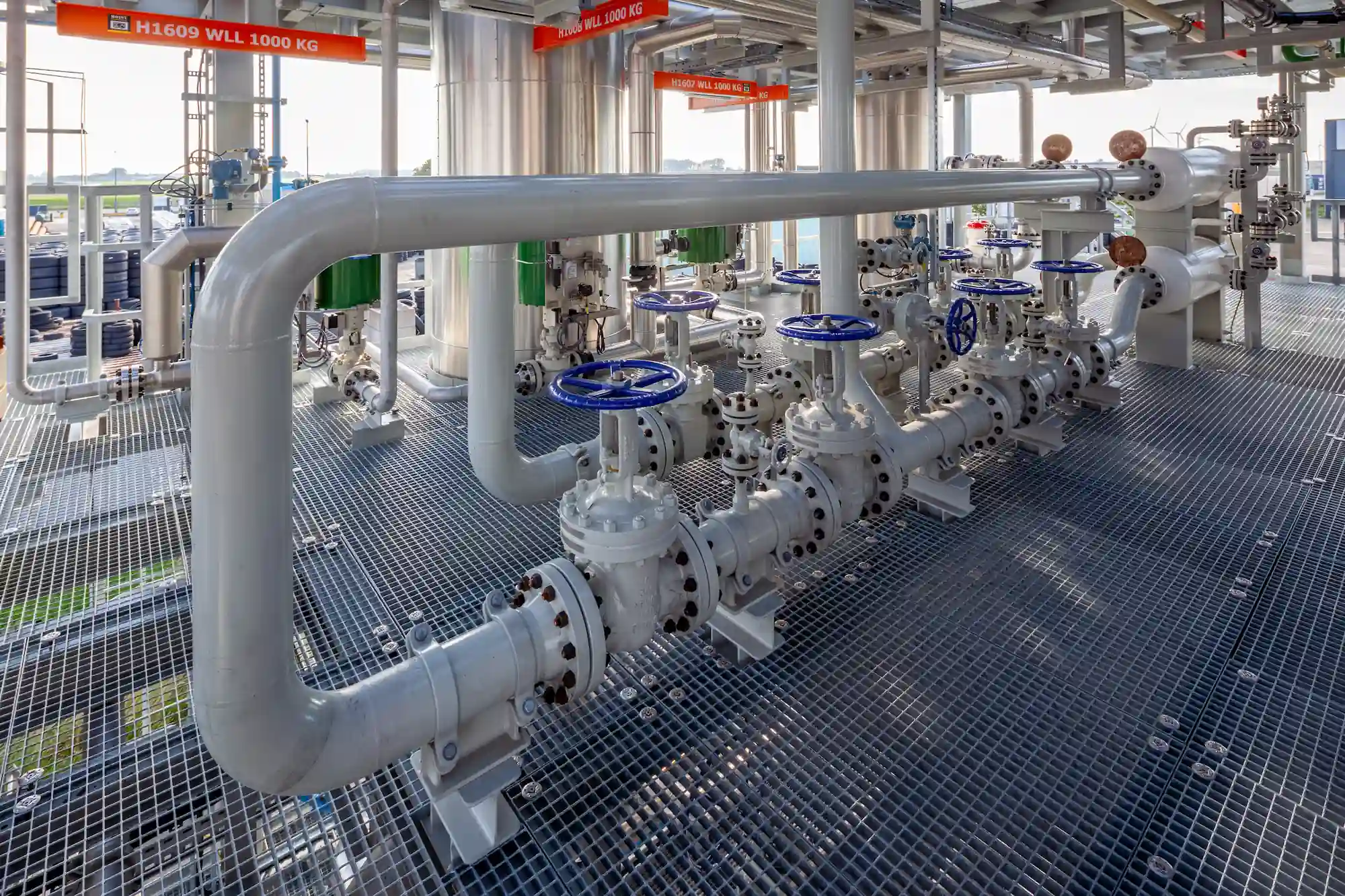
FB Group works with water filtration technology providers to package their designs into fully integrated skid-mounted installations. As a system integrator, FB Group combines knock-out drums, coalescers, filtration vessels, instrumentation (pressure, temperature, and flow sensors), and control panels-as specified by the technology partner-on a single transportable frame. This modular fabrication approach enables rapid deployment at remote gas processing sites with minimal installation time and reduced footprint.
Each unit is fabricated in FB Group’s own facilities to meet ASME VIII Division 1 and EN 13445 standards for unfired pressure vessels, ensuring structural integrity and compliance with international codes. FB Group’s fabrication capabilities include 316L stainless steel construction with electropolished surfaces and chromium oxide passivation for superior corrosion resistance in produced water applications. Pre-commissioning protocols include helium leak testing to 10⁻⁷ atm-cm³/s and particulate cleanliness verification, guaranteeing performance from startup.
Applications in Gas Processing and Energy Operations
In upstream gas conditioning, water filtration units remove entrained liquids, solids, and aerosols from produced water post-separation or dehydration. This prevents corrosion in pipelines, foaming in glycol dehydration contactors, and contamination in natural gas liquids recovery systems. For produced water treatment, units integrate coagulation, flotation, and cartridge filtration before reinjection, operational reuse, or compliant discharge.
In fuel gas systems and turbine feed applications, these units work in conjunction with separation equipment to ensure dry, contaminant-free streams. The skid-mounted design facilitates transport to challenging locations and enables scalability as production demands evolve. For technology providers, FB Group offers a proven fabrication platform with 25+ years of experience building modular process installations for the energy sector-supporting both conventional gas processing and emerging energy transition applications.
Water filtration units represent essential infrastructure in gas processing. By combining specialist filtration technology from experienced partners with FB Group’s modular fabrication and system integration expertise, these installations can be delivered efficiently and to the highest quality standards-meeting the demanding requirements of today’s energy industry.