What is sour gas treatment and why is gas sweetening essential?
Natural gas extracted from wells often contains acidic contaminants such as hydrogen sulfide (H₂S) and carbon dioxide (CO₂). This type of gas, known as sour gas, is unsuitable for commercial use or transport without proper treatment.
Sour gas treatment, also referred to as gas sweetening, removes these contaminants to meet strict pipeline and safety standards. Untreated sour gas is highly corrosive to pipelines and equipment, toxic to personnel, and fails to meet specifications that typically require H₂S levels below 4 ppmv and CO₂ content under 2 to 3 mol%.
By applying effective gas sweetening technologies, operators can transform sour gas into a safe, marketable energy source while protecting infrastructure and ensuring regulatory compliance.
How does sour gas treatment work and which technologies are used?
The sour gas treatment process varies depending on gas composition, pressure, and flow rate. Several proven technologies are used across the oil and gas industry, each suited to specific operational conditions.
Amine scrubbing as the most widely used method
Amine scrubbing is the most commonly applied gas sweetening technique. In this process, natural gas passes through an absorption column where it comes into contact with amine solutions such as monoethanolamine (MEA) or diethanolamine (DEA).
Typical operating conditions include:
Pressure: 20 to 60 bar
Temperature: 30 to 50°C
The amine absorbs H₂S and CO₂, after which it is regenerated through heating. This releases the acid gases for further processing or sulfur recovery, making the system both efficient and reusable.
Claus process for high h₂s concentrations
For gas streams with high hydrogen sulfide concentrations, typically above 4 mol%, the Claus process is used. This method converts H₂S into elemental sulfur through controlled partial combustion followed by catalytic reactions.
It is widely applied in large-scale gas processing facilities where sulfur recovery is economically beneficial.
Alternative technologies for specific applications
In addition to amine systems, alternative sour gas treatment methods are available for specific use cases:
Redox processes using chelated iron or vanadium solutions (operating at 10 to 40 bar)
Biological treatment using bacteria such as Thiobacillus species
Systems designed for low flow rates or ambient temperature conditions
These technologies are particularly suitable for smaller-scale operations or where conventional methods are less efficient.
Modular sour gas treatment units for efficient implementation
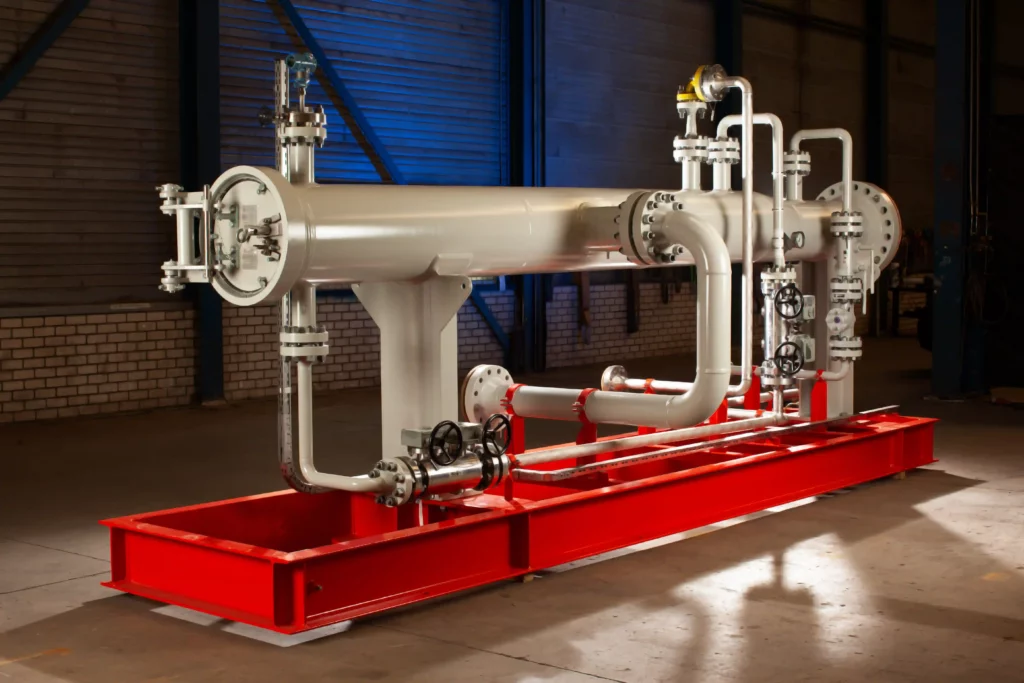
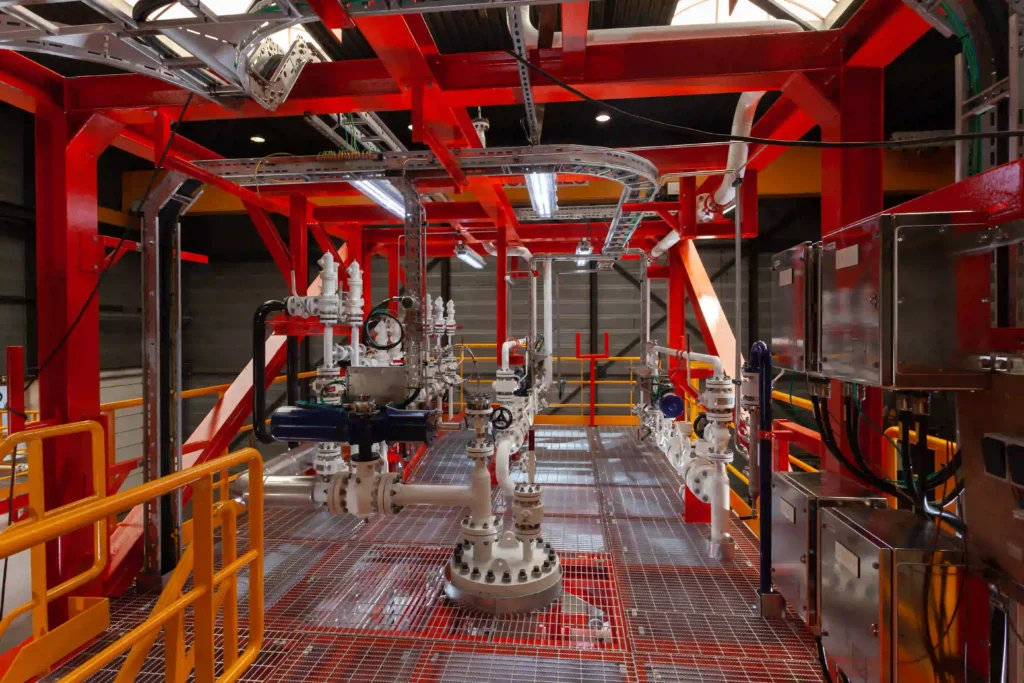
FB Group collaborates with sour gas treatment technology providers to translate process designs into fully engineered, skid-mounted installations. These modular systems are designed for:
- Offshore platforms
- Remote production locations
- Existing facilities requiring capacity expansion
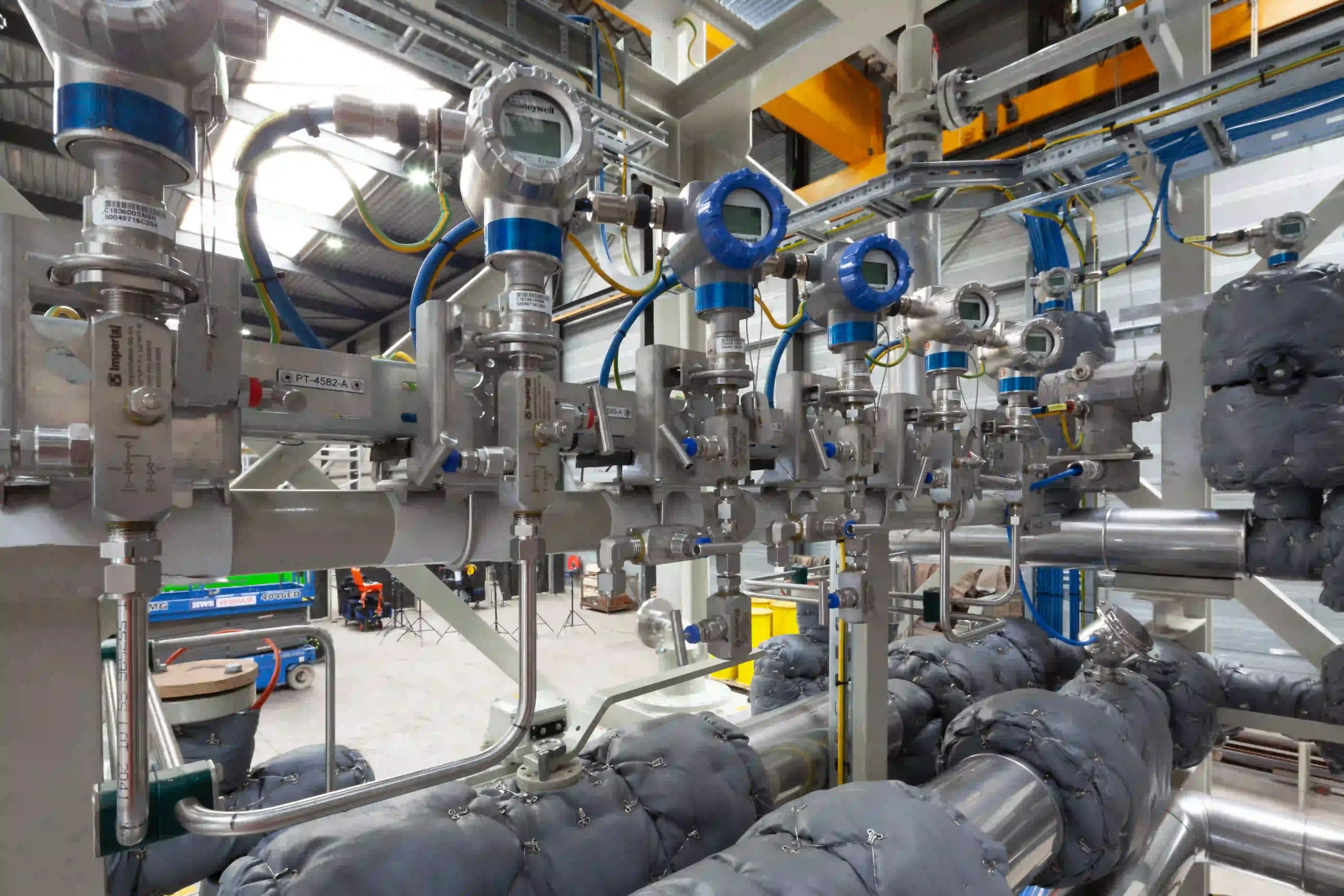
By integrating key components such as amine contactors, regeneration systems, and auxiliary equipment into compact units, FB Group enables faster deployment and operational flexibility.
Engineering and compliance for sour service applications
All systems are manufactured in controlled workshop environments, ensuring high quality and compliance with international standards, including:
ASME VIII Division 1 for pressure vessels
EN 13445 for European applications
NACE MR0175 / ISO 15156 for sour service environments
These standards are critical to prevent issues such as sulfide stress cracking and to ensure safe, long-term operation under harsh conditions.
The modular design also supports a wide range of gas flow capacities, from small-scale production to high-throughput processing, while meeting international transport requirements.
Benefits of skid-mounted sour gas treatment systems
Skid-mounted sour gas treatment units offer clear advantages over traditional stick-built installations:
- 20 to 40% reduction in capital expenditure
- Shorter project timelines due to minimal on-site construction
- Improved quality control through off-site fabrication
- Scalable and flexible system configurations
For technology providers, this approach eliminates the need for large investments in manufacturing infrastructure while maintaining control over process design and performance.
Why sour gas treatment is important for the energy transition
Sour gas treatment plays a key role in unlocking stranded gas reserves that would otherwise remain undeveloped. By enabling the safe and efficient processing of these resources, it contributes to a more sustainable and efficient energy supply.
Modular treatment solutions support faster deployment, reduced emissions through improved processing efficiency, and better utilization of existing resources.
Sour gas treatment as a strategic solution for gas processing
Sour gas treatment through modular process units is a proven and scalable solution for modern gas processing challenges. By combining advanced gas sweetening technologies with modular engineering and system integration, operators can efficiently convert sour gas into valuable energy resources.
FB Group bridges the gap between process design and field-ready installations, delivering reliable, compliant, and cost-effective sour gas treatment systems for a wide range of applications.