Water vapor in gas streams poses significant challenges across the energy sector-from hydrate formation in (cryogenic) natural gas processing to corrosion in carbon capture systems and hydrogen embrittlement in fuel cell applications. Molecular sieve dehydration addresses these challenges by removing water to extremely low concentrations, often below 0.1 parts per million by volume. This adsorption-based technology has become essential for operations requiring stringent moisture specifications, particularly in liquefied natural gas (LNG) production, hydrogen storage and conditioning, and CO₂ compression for carbon capture and storage.
How molecular sieve dehydration works
Molecular sieve dehydration employs synthetic zeolite-based adsorbents with precisely controlled pore structures to selectively capture water molecules from gas streams. These crystalline alumina-silica materials contain uniform pores measuring 3 to 5 angstroms in diameter-small enough to trap water while allowing larger gas molecules to pass through.
Types and selection criteria
The three primary molecular sieve types serve distinct applications:
Type 3A (3 angstrom pores) selectively adsorbs water molecules exclusively, making it ideal for natural gas dehydration where only moisture removal is required.
Type 4A (4 angstrom pores) captures both water and carbon dioxide, suitable for gas streams requiring simultaneous removal of these contaminants.
Type 5A (5 angstrom pores) handles larger molecules including nitrogen alongside water and CO₂, used in more complex separation requirements.
Process configuration and cycle
A typical molecular sieve unit comprises two or more vertical adsorption towers filled with zeolite beads or pellets. Inert ceramic balls at the top and bottom of each bed prevent material attrition during operation. While one tower actively dries the gas stream, the other undergoes regeneration-a continuous cycling process managed by automatic switching valves.
Wet gas enters at the top of the online tower at pressures typically ranging from 30 to 100 bar and temperatures between 20°C and 50°C. As the gas flows downward through the adsorbent bed, water molecules adhere to the zeolite pore surfaces through physical van der Waals forces-a common misconception is that sieves “absorb” water chemically, when in fact the process is purely physical adsorption.
Regeneration occurs by flowing heated gas counterflow through the offline tower at high temperatures, releasing the captured water. The tower then cools before returning to adsorption duty. Complete cycles typically run 4 to 12 hours, with regeneration gas consuming 10 to 20 percent of total throughput.
FB Group’s modular molecular sieve solutions
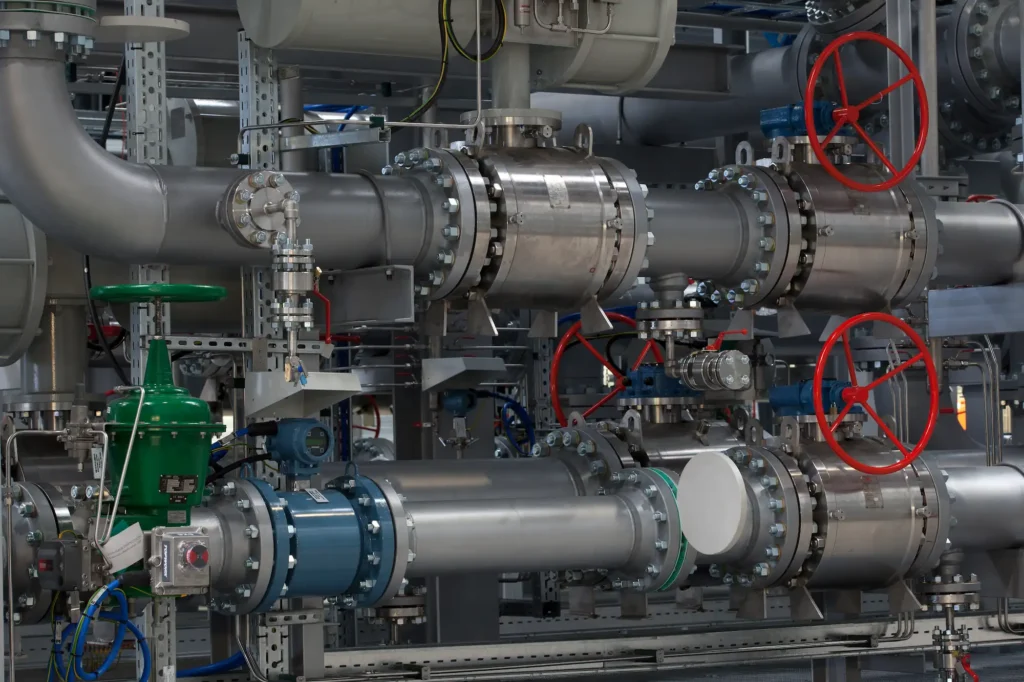
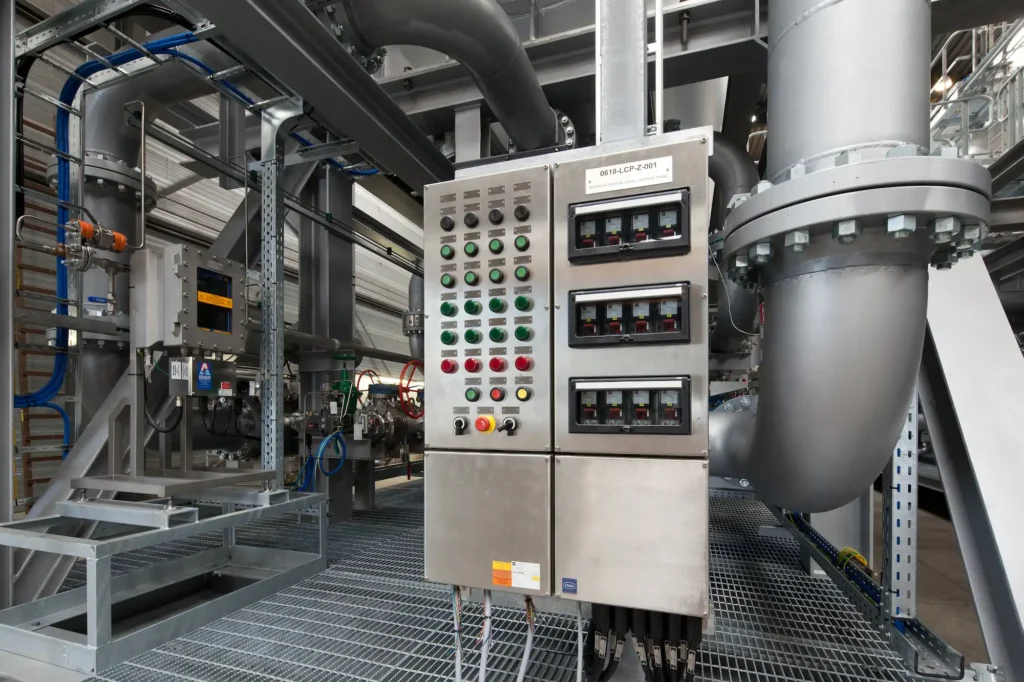
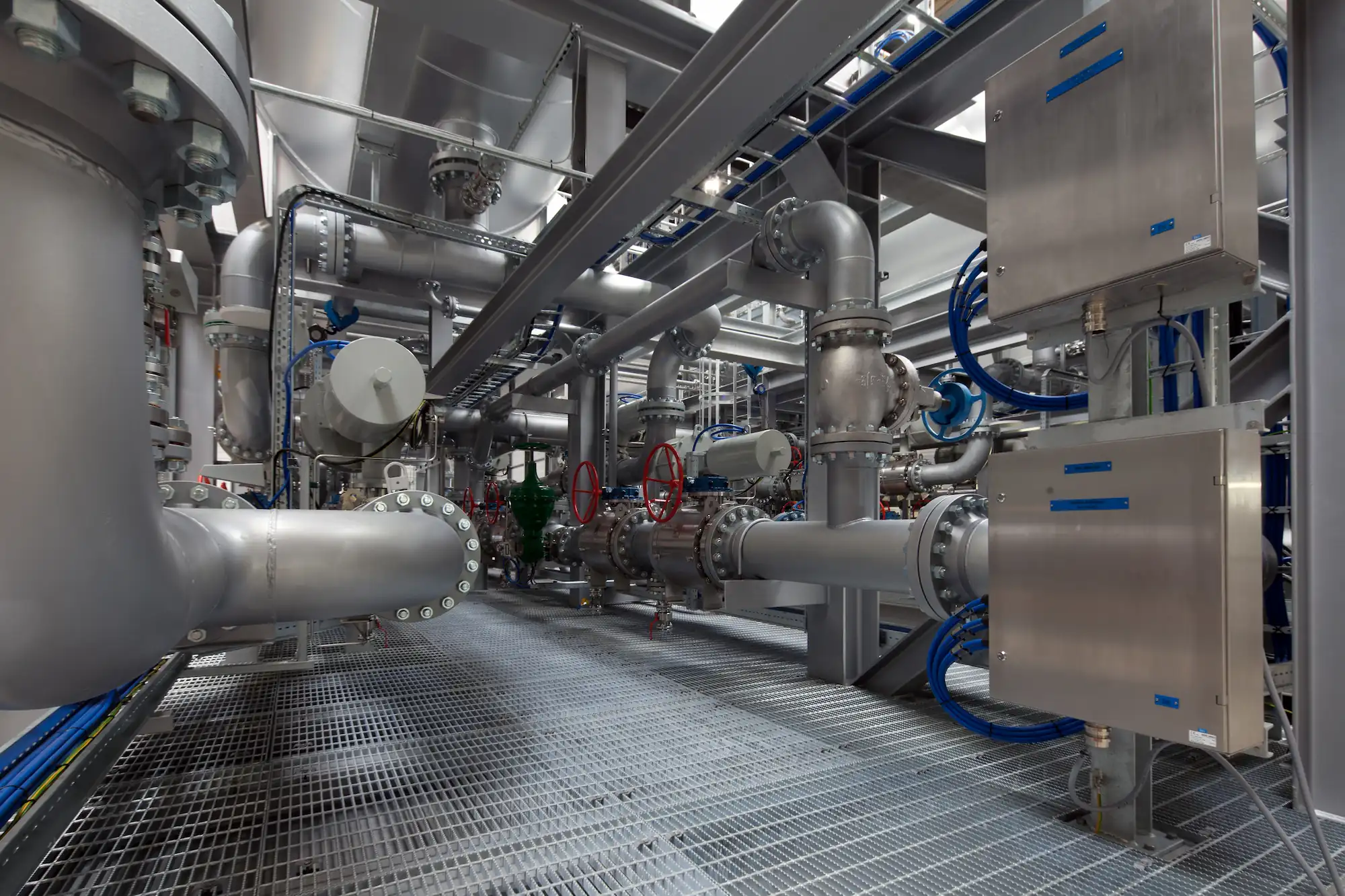
FB Group integrates molecular sieve dehydration into compact, skid-mounted process units designed for rapid deployment and operational flexibility. These pre-assembled systems incorporate all necessary components-adsorption towers, automatic switching valves, regeneration heaters, coolers, and condensate separators-on a single structural frame.
This modular approach delivers particular advantages for energy transition projects and remote installations. A complete dehydration unit can be factory-tested, transported to site, and commissioned with minimal field construction, significantly reducing project timelines and capital expenditure. The plug-and-play design suits applications ranging from small-scale hydrogen production facilities to natural gas processing trains and CO₂ conditioning systems for carbon capture projects.
For hydrogen applications, FB Group’s molecular sieve units dry product streams from electrolysis or steam methane reforming to specifications required for fuel cells and pipeline transport, preventing hydrogen embrittlement in downstream equipment. In carbon capture systems, these units process CO₂-rich streams to remove moisture that would otherwise cause corrosion during compression and transport to storage sites.
Performance advantages
Molecular sieve dehydration achieves water dew points below -40°C and frequently reaches concentrations under 0.1 ppmv H₂O-performance levels unattainable with alternative technologies like glycol absorption, which typically achieves dew points around -40°C at best. This ultra-low moisture capability proves essential for cryogenic operations including NGL recovery and LNG liquefaction, where even trace water causes equipment-damaging hydrate formation.
The adsorption capacity of molecular sieves reaches approximately 21 percent by weight for water, substantially exceeding silica gel performance at humidity levels up to 40 percent relative humidity. When properly designed with adequate mass transfer zone allowance and operated within temperature limits to avoid zeolite sintering, molecular sieve beds maintain regeneration efficiency above 95 percent with typical service lives of 3 to 5 years.
Conclusion
Molecular sieve dehydration represents a proven technology for achieving the stringent moisture specifications demanded by modern gas processing, from traditional LNG production to emerging hydrogen and carbon capture applications. FB Group’s expertise in modular, skid-mounted implementations makes this critical technology accessible for projects requiring compact footprints, rapid deployment, and reliable performance across the evolving energy landscape.