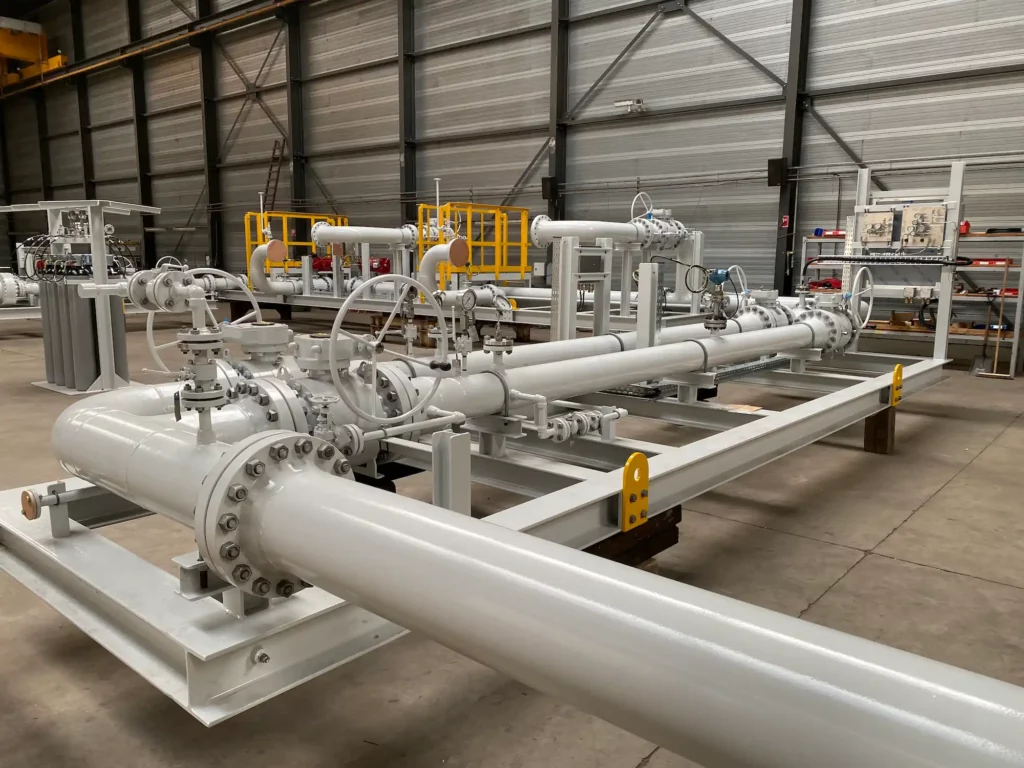
Gas sweetening is a critical purification process that removes hydrogen sulfide (H₂S), carbon dioxide (CO₂), and mercaptans from natural gas and biogas streams. The term “sweetening” refers to the transformation of “sour gas”-characterized by corrosive acid gases and foul odors-into “sweet gas” that meets pipeline specifications and safety standards. This process is fundamental to natural gas processing operations worldwide, protecting infrastructure from corrosion, ensuring worker safety, and enabling compliance with environmental regulations.
The removal of these acid gases serves multiple essential functions: H₂S poses severe toxicity risks to personnel, while both H₂S and CO₂ cause aggressive corrosion in pipelines and processing equipment. Beyond safety and infrastructure protection, gas sweetening ensures that natural gas meets the quality specifications required for commercial transport, downstream processing, and end-use applications.
Core gas sweetening technologies
Amine-based absorption systems
The most widely deployed gas sweetening technology utilizes regenerative absorption with amine solvents. This approach employs aqueous solutions of alkanolamines to selectively capture H₂S and CO₂ from the gas stream. The process operates through two interconnected vessels: an absorber where sour gas contacts lean solvent, transferring acid gases into solution, and a regenerator where the rich solvent is heated to release the captured contaminants.
Modern amine formulations incorporate activators such as piperazine, monoethanolamine (MEA), and diethanolamine (DEA) to enhance CO₂ absorption rates while minimizing the energy required for solvent regeneration. These additives function as molecular shuttles, accelerating diffusion and improving overall process efficiency. Additional components including corrosion inhibitors, buffers, and foam depressants optimize performance for specific gas compositions and operating conditions.
Alternative sweetening approaches
Physical solvents offer advantages for high-pressure applications, relying on gas solubility rather than chemical reaction. Regeneration occurs through pressure reduction or inert gas stripping, making this approach particularly suitable for gases with high acid gas concentrations.
Solid sorbent systems using zeolites or molecular sieves provide batch-mode operation capable of removing multiple contaminants simultaneously, including water, mercaptans, and acid gases. These systems regenerate through temperature-swing or pressure-swing cycles.
Chemical conversion processes such as iron oxide beds and catalytic oxidation systems directly convert H₂S to elemental sulfur, eliminating the need for separate sulfur recovery units in certain applications. Biological processes like THIOPAQ utilize microorganisms to oxidize absorbed H₂S, offering environmentally sustainable alternatives for biogas applications.
FB Group’s modular gas sweetening solutions
FB Group specializes in integrating gas sweetening technology into compact, skid-mounted process units that deliver complete functionality in transportable packages. The standardized architecture of gas sweetening-comprising absorber, regenerator, heat exchangers, flash drums, and control systems-aligns perfectly with modular design principles.
These skid-mounted configurations enable rapid deployment to remote locations, offshore platforms, and distributed gas production sites where traditional stick-built construction proves impractical or uneconomical. FB Group’s modular units are engineered with standardized interfaces that facilitate integration with upstream dehydration systems and downstream sulfur recovery or CO₂ capture equipment.
The modular approach provides operational flexibility through configurable solvent systems tailored to specific feed gas characteristics. Whether processing associated gas from oil production, conditioning biogas for pipeline injection, or treating natural gas for LNG applications requiring deep CO₂ removal, FB Group’s skid-mounted units can be optimized for diverse performance requirements.
Industry benefits and applications
Modular gas sweetening units deliver distinct advantages for energy sector applications. Reduced on-site construction requirements compress project timelines and minimize field labor costs. Factory fabrication ensures quality control and enables comprehensive pre-commissioning testing before shipment.
Scalability represents another key benefit-multiple units can be deployed in parallel to accommodate production growth or configured for phased field development. This flexibility proves particularly valuable for unconventional gas resources, stranded gas monetization projects, and transitional energy applications.
The compact footprint of skid-mounted systems addresses space constraints on offshore platforms and brownfield sites while maintaining full processing capability. Standardized designs reduce engineering hours for repeat applications, lowering overall project costs.
Conclusion
Gas sweetening remains an indispensable technology for natural gas processing, biogas upgrading, and emerging hydrogen production applications. As the energy industry continues its transition toward cleaner fuels and decarbonization, the ability to efficiently remove acid gases from various gas streams grows increasingly important. FB Group’s expertise in modular process design and skid-mounted equipment fabrication positions the company to deliver gas sweetening solutions that meet evolving industry requirements with proven technology in optimized, deployable packages.