An amine treating unit is a critical process system that removes hydrogen sulfide (H₂S) and carbon dioxide (CO₂) from sour gases using aqueous amine solutions. This gas sweetening technology transforms contaminated gas streams into clean, specification-grade products suitable for pipeline transport, industrial use, or further processing. As global energy markets shift toward cleaner fuels and carbon capture, amine treating has become indispensable-not only for traditional natural gas processing but also for emerging applications in biogas upgrading, blue hydrogen production, and pre-combustion CO₂ separation.
How amine treating units work
The core of an amine treating unit consists of two interconnected columns operating in a continuous regenerative cycle. In the absorber (or contactor), lean amine solution flows downward while sour gas rises counter-currently. The amine selectively absorbs H₂S and CO₂, becoming “rich” amine that exits at the bottom. This rich solution then flows to the regenerator (or stripper), where a reboiler heats it to approximately 105-125°C. This thermal energy releases the absorbed acid gases as overhead vapor, regenerating the lean amine for recirculation back to the absorber.
Amine selection and operating parameters
Process engineers select from several amine types based on gas composition and removal objectives:
- Monoethanolamine (MEA) at 15-30% concentration excels at removing both H₂S and CO₂ completely
- Diethanolamine (DEA) at 25-35% offers moderate selectivity with lower corrosion rates
- Methyldiethanolamine (MDEA) at 40-50% provides selective H₂S removal while allowing controlled CO₂ slip-through
Typical operating conditions include absorber pressures of 30-70 bar, which enhance absorption efficiency. The amine circulation rate typically ranges from 0.1 to 1.0 normal cubic meters of amine per normal cubic meter of gas treated, depending on the acid gas loading in the feed stream. Lean amine loading is maintained below 0.1 mol acid gas per mol amine to ensure removal efficiencies exceeding 95%.
Supporting equipment and process optimization
Beyond the primary columns, amine units incorporate heat exchangers that cross-exchange heat between lean and rich amine streams, recovering 50-70% of thermal energy and significantly reducing operating costs. Filtration systems remove hydrocarbons, particulates, and corrosion products that can cause foaming-a common operational challenge. Antifoam agents at 10-50 ppm concentrations help maintain stable operation when contaminants are present.
Applications across traditional and transitioning energy markets
Amine treating units serve diverse applications throughout the energy sector. In conventional natural gas processing, they remove acid gases to meet pipeline specifications-typically below 4 ppm H₂S and less than 2 mol% CO₂-preventing pipeline corrosion and ensuring safe combustion. Refineries deploy amine units to treat hydrotreater recycle gas and fluid catalytic cracker off-gas.
The energy transition has expanded amine treating applications considerably. Biogas upgrading facilities use amine systems to remove CO₂ and H₂S, enabling renewable natural gas injection into distribution networks. Blue hydrogen production relies on amine units to capture CO₂ from steam methane reforming, supporting carbon sequestration objectives. These emerging applications demonstrate how established gas treating technology adapts to decarbonization goals.
FB Group’s modular amine treating solutions
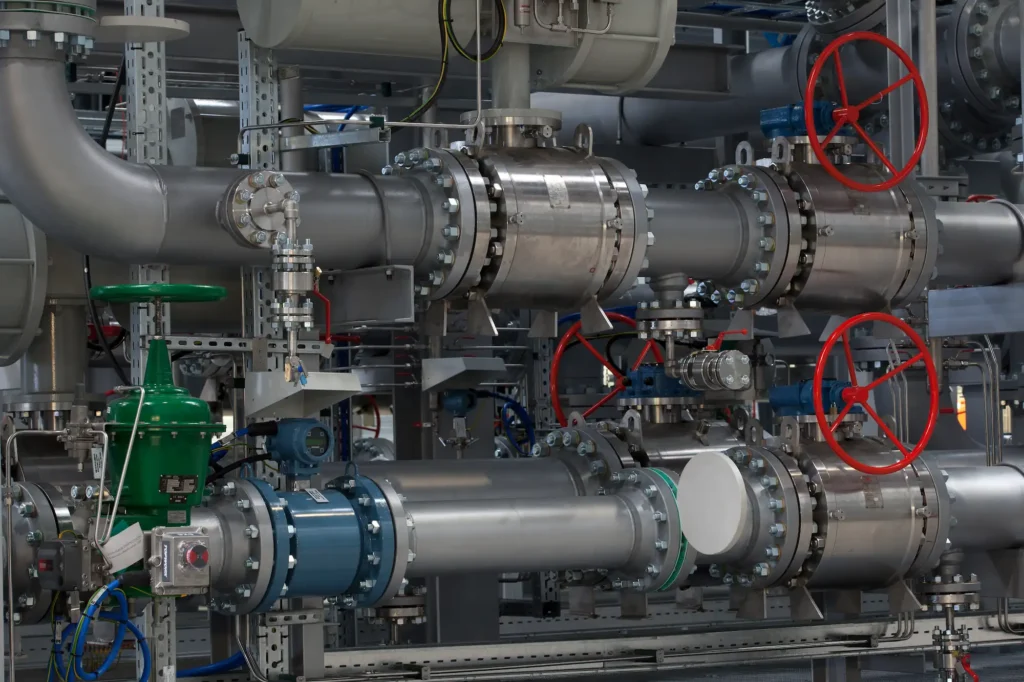
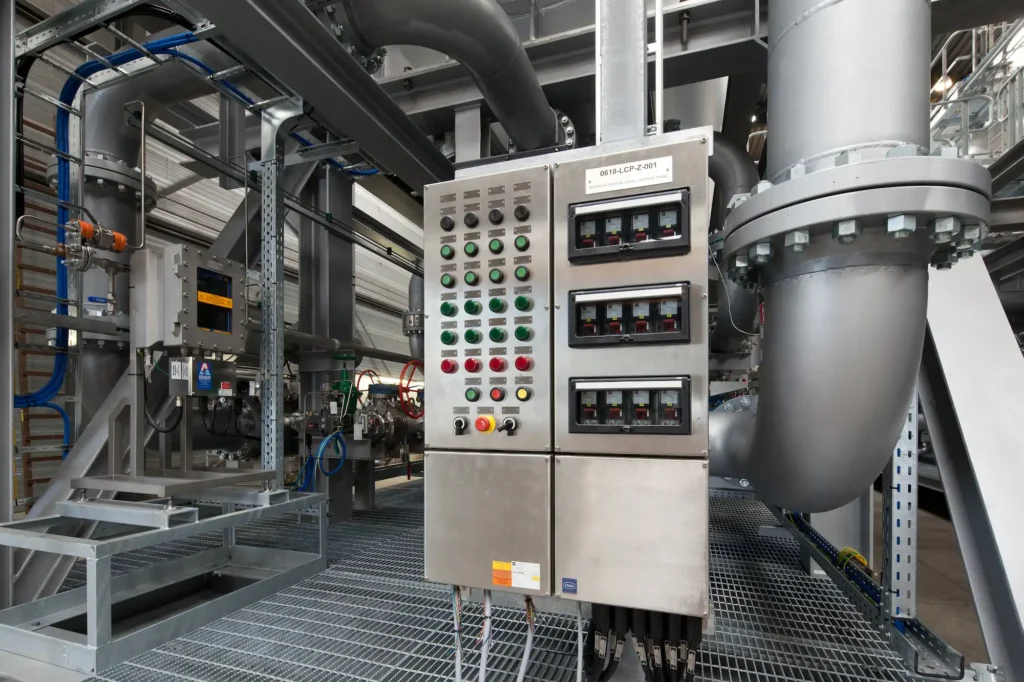
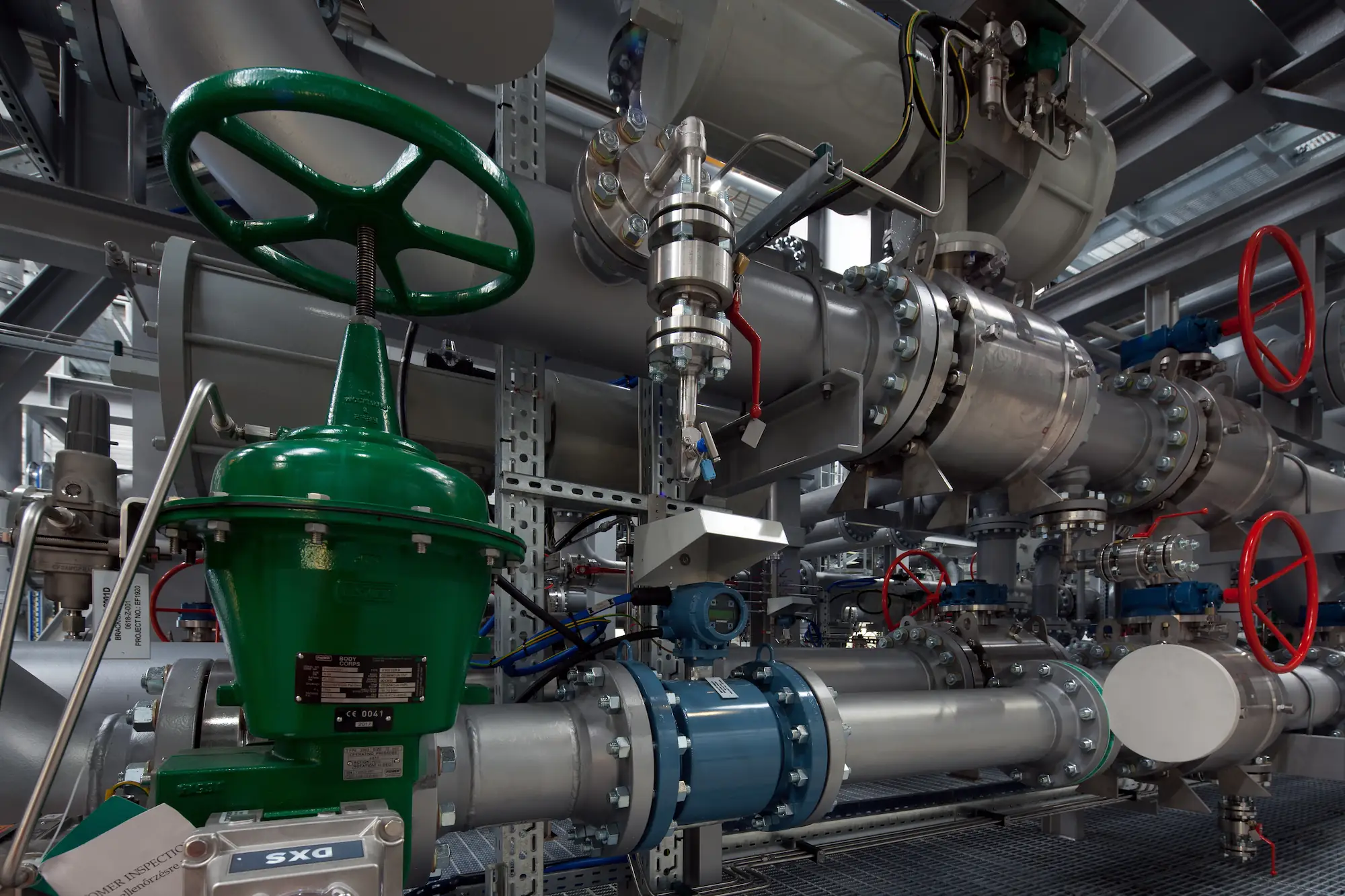
FB Group specializes in delivering amine treating units as pre-fabricated, skid-mounted process systems that integrate absorber, regenerator, heat exchangers, pumps, and instrumentation into compact, transportable modules. These modular designs typically handle capacities from 1 to 50 million standard cubic meters per day and offer substantial advantages for both traditional gas fields and energy transition projects.
Modular construction reduces capital expenditure by 20-40% compared to stick-built facilities while minimizing on-site construction time. For remote gas fields, offshore platforms, or rapidly developing biogas facilities, skid-mounted units enable faster project execution and earlier revenue generation. The closed-loop amine regeneration cycle delivers low operating costs, with modern electrically heated systems offering competitive energy efficiency.
FB Group designs these systems according to rigorous industry standards including ASME or EN standards. This compliance ensures safe, reliable operation across diverse operating environments.
Conclusion
Amine treating units represent proven, versatile technology for removing acid gases from industrial gas streams. As modular, skid-mounted solutions, they provide the flexibility and economic efficiency that modern energy projects demand-whether processing conventional natural gas, upgrading biogas, or supporting hydrogen production with carbon capture. Their adaptability positions amine treating as a cornerstone technology bridging traditional energy infrastructure and the decarbonized energy systems of tomorrow.