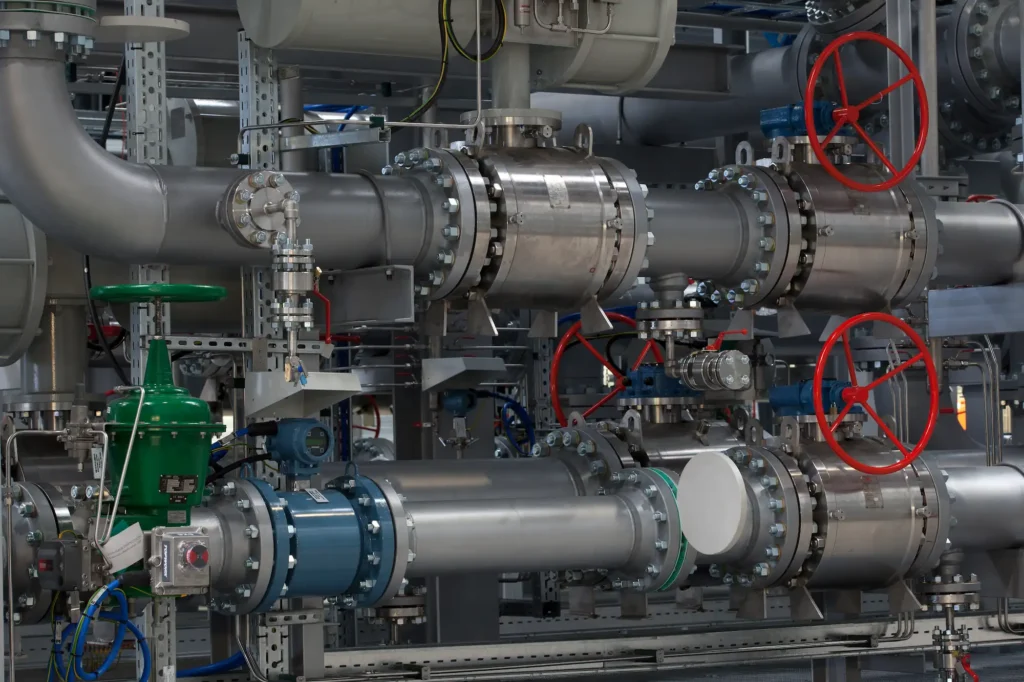
Gas filtration and coalescers represent critical separation technology in modern process engineering, designed to remove liquid droplets and fine particulates from gas streams. Unlike conventional filters that primarily capture solid particles, coalescing filters employ specialized mechanisms to merge microscopic liquid aerosols-including water, oil, and hydrocarbon droplets-into larger droplets that can be efficiently drained by gravity. This technology is essential across natural gas processing, hydrogen production, CO₂ capture systems, and numerous other applications where gas purity directly impacts equipment performance, product quality, and operational safety.
How coalescing technology works
The fundamental principle behind coalescers involves forcing gas streams through fibrous media, typically constructed from borosilicate microfibers or advanced membrane materials. As the gas passes through these media, liquid aerosols as small as 0.1-0.3 micrometers contact the fibers through three primary mechanisms: direct interception along gas streamlines, impaction where larger droplets collide with fibers due to inertia, and Brownian diffusion that captures submicron particles through random molecular motion.
At fiber intersections, these tiny droplets coalesce into progressively larger droplets exceeding 300-400 micrometers in diameter. Once reaching this critical size, gravity overcomes the gas flow forces, causing the coalesced liquid to drain to collection sumps for removal. This active droplet-growth process distinguishes coalescers from passive separation equipment that relies solely on gravitational or centrifugal forces.
Types and configurations
Gas-liquid coalescers are the most common configuration in process applications, achieving removal efficiencies exceeding 99.9% for droplets down to 0.3 micrometers. These systems typically feature vertical or horizontal housings with inlet diffusers to distribute flow evenly, replaceable coalescing elements arranged in inside-to-outside flow patterns, separator sections for droplet collection, and automatic drain systems.
Modern coalescer designs accommodate pressures up to 100 bar and temperatures reaching 200°C, with typical pressure drops between 0.07-0.35 bar across clean elements. For particularly demanding applications involving sour gas with hydrogen sulfide or carbon dioxide, specialized epoxy-coated housings and materials compliant with NACE MR0175/ISO 15156 standards ensure corrosion resistance and longevity.
Applications in energy and process industries
In natural gas processing facilities, coalescers protect downstream compressors, dehydration units, and pipeline infrastructure by removing entrained water and hydrocarbon liquids that could cause corrosion, hydrate formation, or equipment fouling. Refineries employ these systems in fuel gas conditioning to ensure turbine feed gas meets strict purity specifications, preventing blade erosion and combustion issues.
The technology proves equally vital in emerging energy transition applications. Hydrogen production and distribution systems require coalescers to remove water aerosols that could cause embrittlement in pipelines or poison fuel cell catalysts. In carbon capture installations, coalescers purify compressed CO₂ streams by separating entrained water, glycols, and other contaminants before transport or sequestration, ensuring pipeline quality and preventing corrosion in injection wells.
Integration with modular process units
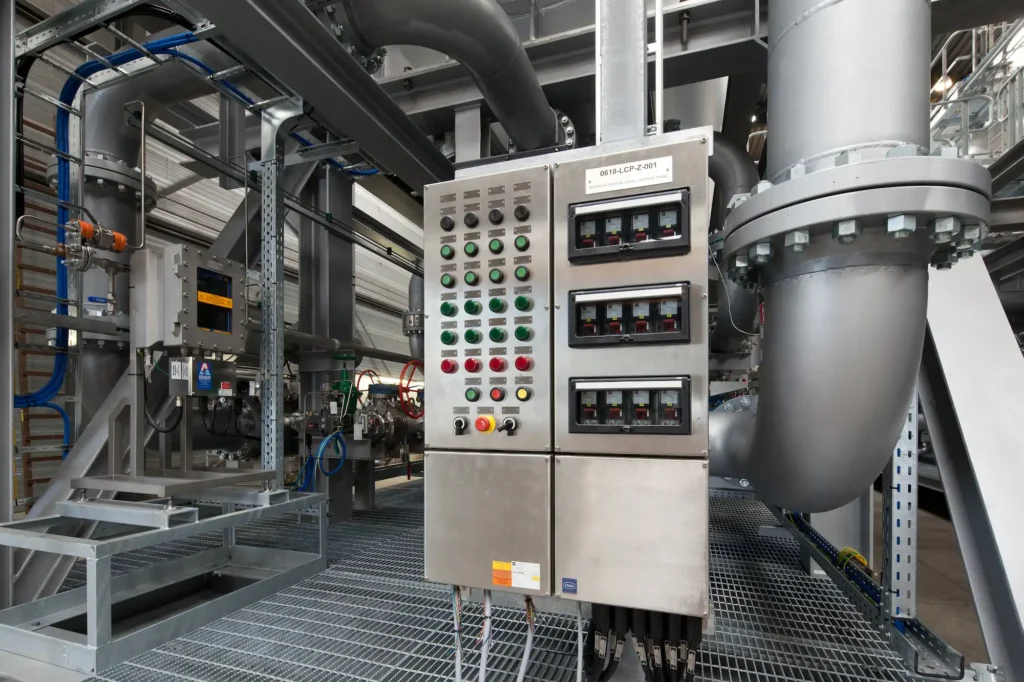
Coalescers integrate seamlessly into skid-mounted process systems, offering significant advantages for modular construction approaches. Pre-engineered filter-coalescer packages arrive at site as complete units with housings, elements, instrumentation, and automated drain systems already installed and tested.
For FB Group’s modular process units, coalescer integration supports rapid deployment of natural gas processing trains, hydrogen generation skids, and CO₂ capture systems. The plug-and-play nature of these standardized packages reduces installation time, minimizes field welding and piping work, and enables faster commissioning-particularly valuable for remote locations or projects with aggressive schedules. Compliance with ASME or EN pressure vessel codes ensures these modular systems meet international requirements.
Operational considerations and best practices
Effective coalescer operation requires attention to several key parameters. Gas velocities should remain below 0.2-0.5 meters per second through the coalescing media to prevent re-entrainment of separated liquids. Two-stage filtration-combining upstream particulate filters with downstream coalescers-protects the coalescing elements from fouling by solid contaminants, significantly extending service life.
Monitoring differential pressure across elements provides the primary indicator for replacement, with typical change-out recommended when pressure drop exceeds 0.7 bar above baseline. Automated drain systems prevent liquid accumulation that could compromise separation efficiency or cause carryover during flow surges.
Conclusion
Gas filtration and coalescers deliver essential purification for gas streams across traditional and renewable energy applications. By efficiently removing liquid aerosols and protecting downstream equipment, these systems enhance reliability, extend asset life, and ensure product quality. Their compatibility with modular, skid-mounted designs makes them particularly valuable for modern energy projects requiring rapid deployment and proven performance.