Water vapor removal from natural gas and CO₂ streams is essential for preventing hydrate formation, pipeline corrosion, and operational disruptions in energy infrastructure. Two dominant technologies address this challenge: triethylene glycol (TEG) absorption systems and molecular sieve adsorption units. Each offers distinct advantages for different dehydration requirements, making the selection critical for process engineers designing modular gas treatment facilities.
Technical fundamentals
TEG systems operate through liquid absorption, where triethylene glycol selectively captures water molecules in a contactor column. The water-laden glycol then undergoes thermal regeneration at temperatures between 190°C and 205°C in a stripping column, releasing absorbed moisture and restoring the glycol for continuous circulation. Operating at typical feed conditions of 30 bar and 30°C, this approach typically achieves water content levels of 30 to 50 ppmv, with optimized configurations reaching below 5 ppmv under specific conditions. The technology requires careful monitoring of glycol pH and corrosion inhibitors to maintain performance, with media life extending from 3 to 10 years depending on feed gas impurities.
Molecular sieve systems employ solid zeolite beds-commonly 3A or 4A types-that physically adsorb water molecules onto their porous crystalline structure. These systems operate in cyclic configurations with dual or multiple beds, where one bed actively dehydrates the gas stream while another undergoes regeneration through temperature swing adsorption (TSA) at 200-250°C or pressure swing adsorption (PSA) methods. Molecular sieves routinely deliver ultra-low water content below 1 to 10 ppmv, making them ideal for stringent specifications such as CO₂ compression for carbon capture and storage applications or LNG pretreatment. Acid-resistant sieve formulations handle CO₂-rich streams effectively, though guard beds are typically required to protect against feed impurities. Media replacement is typically needed every 2 to 4 years, with 3 years being standard.
Performance comparison
The selection between TEG and molecular sieve dehydration systems depends on target water specifications and economic factors. TEG systems offer lower capital and operating costs for moderate drying requirements above 30 ppmv, making them cost-effective for conventional natural gas processing at large scale. Molecular sieves, despite capital costs 2 to 3 times higher and periodic media replacement, prove economical when ultra-low moisture levels below 10 ppmv are mandatory or when treating impurity-laden streams.
Both technologies are sensitive to feed gas impurities: nitrogen oxides and sulfur compounds degrade TEG performance, while molecular sieves require upstream treatment to prevent premature breakthrough and shortened cycle times. Multi-stage series configurations-combining compression, TEG bulk removal, and molecular sieve polishing-optimize both cost and reliability for demanding applications.
Modular integration by FB Group
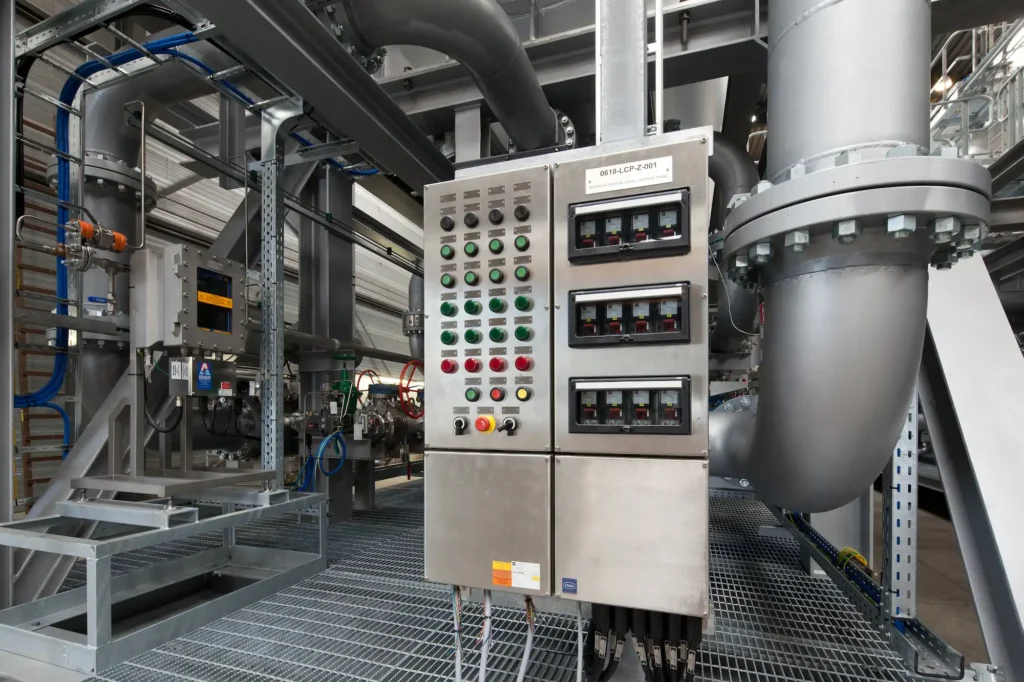
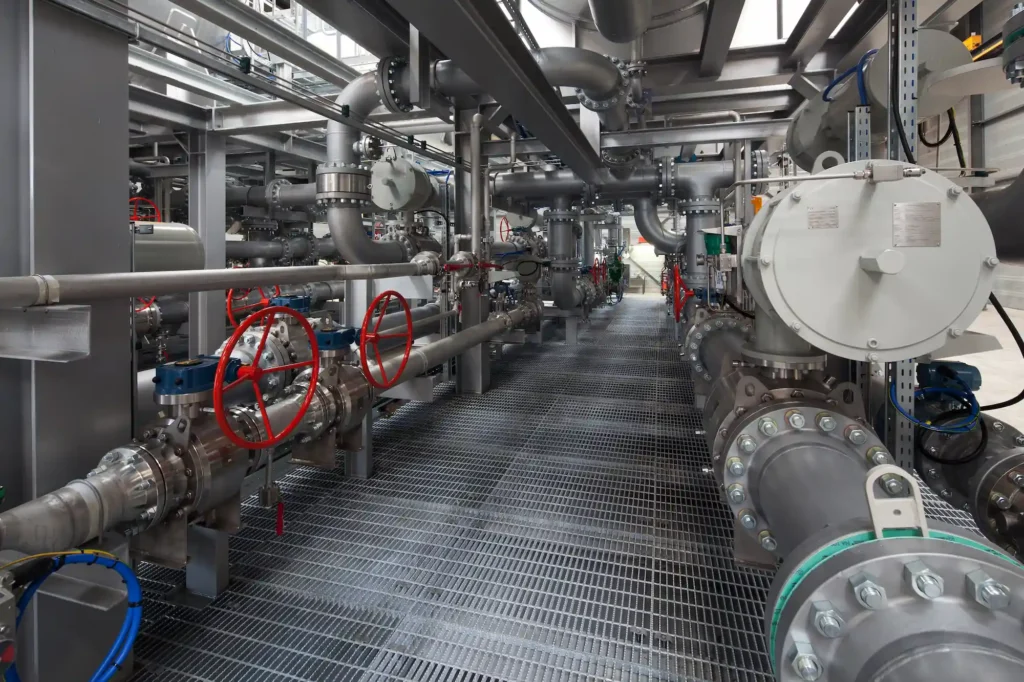
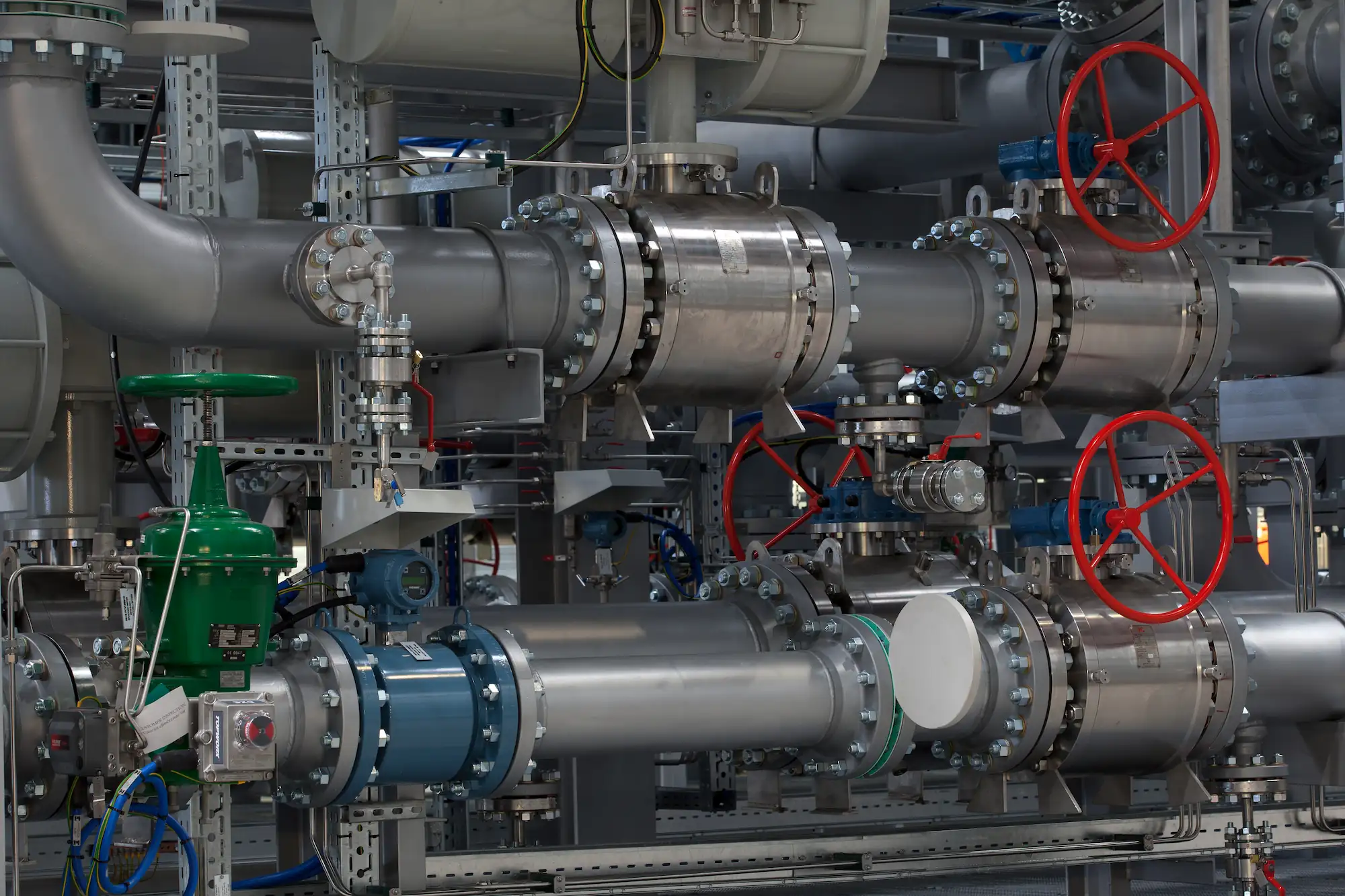
FB Group works with dehydration technology providers to integrate both TEG and molecular sieve systems into compact, skid-mounted process units designed for rapid deployment worldwide. For TEG dehydration-a technology closely related to FB Group’s existing gas conditioning experience-skids feature pre-assembled contactors, reboilers, circulation pumps, and regeneration columns, all engineered to ASME VIII and EN 13445 pressure vessel standards for reliable operation at pressures up to 30 bar and beyond.
For molecular sieve systems, which require more specialized process knowledge, FB Group partners with technology licensors to fabricate skids with pre-piped adsorber vessels, automated switching valves, and integrated regeneration systems. The modular design allows for multi-stage configurations, where upstream TEG units handle bulk water removal before molecular sieve polishing achieves final specifications. This staged approach, combining FB Group’s fabrication expertise with the technology partner’s process guarantees, optimizes both capital expenditure and operational efficiency.
The compact footprint of skid-mounted units minimizes site preparation requirements while maintaining full compliance with international pressure vessel standards. Factory testing in FB Group’s own facilities ensures reliability before shipment, while the modular approach reduces on-site construction time and enables flexible deployment for offshore platforms, remote gas fields, and carbon capture facilities. For technology providers, this partnership model offers a proven path from process design to industrial-grade installation.
Conclusion
Understanding the capabilities and trade-offs between TEG absorption and molecular sieve adsorption technologies enables optimal system selection for natural gas processing and CO₂ dehydration applications. FB Group’s capabilities as a system integrator-combined with process knowledge from specialist technology partners-transform these technologies into turnkey modular installations that support the global energy transition, delivering reliable water vapor removal across diverse operating conditions and specifications.