Industrial facilities and power plants worldwide face stringent requirements to minimize atmospheric emissions from combustion processes. Flue gas treatment is a process designed to reduce pollutants emitted from burning fossil fuels or waste before discharge through the stack. This technology removes harmful substances-including sulfur dioxide (SO₂), nitrogen oxides (NOₓ), particulates, mercury, dioxins, and heavy metals-from exhaust gases to ensure compliance with national and international clean-air regulations while supporting the transition toward cleaner industrial operations.
Technical process and key characteristics
Flue gas treatment systems employ sequential technologies tailored to specific pollutant profiles and combustion conditions. The process begins with critical temperature management: gases exiting combustion at approximately 1200°C undergo controlled cooling through waste heat boilers, reducing temperatures to around 550°C for energy recovery. Rapid quenching to 200°C within one second prevents reformation of harmful dioxins, while subsequent reheating to minimum 130°C optimizes downstream treatment effectiveness by controlling moisture content in the gas stream.
Treatment technologies are typically combined in integrated multi-stage configurations. Dry processes inject hydrated lime powder to neutralize acidic gases, producing salts and fly ash separated by fabric filters or electrostatic precipitators. This approach offers lower investment costs, space efficiency, and straightforward automation-particularly suitable for lower-capacity installations. Wet processes use iso-enthalpic expansion to transfer pollutants from gas phase to liquid phase, where they undergo separate treatment or recycling. Advanced systems incorporate Selective Catalytic Reduction (SCR) for nitrogen oxide removal at various temperature points, activated carbon adsorption for mercury and dioxin capture, and flue gas desulfurization (FGD) units that produce reusable gypsum by-products. Modern systems achieve removal rates exceeding 90 percent for targeted pollutants, with fabric filters maintaining outlet dust concentrations below 10 mg/Nm³.
For waste-to-energy and hazardous waste incineration applications, treatment sequences include secondary combustion chambers operating above 1100°C with minimum two-second residence times for complete organic compound decomposition, followed by integrated cooling, absorption, and filtration stages.
Modular integration by FB Group
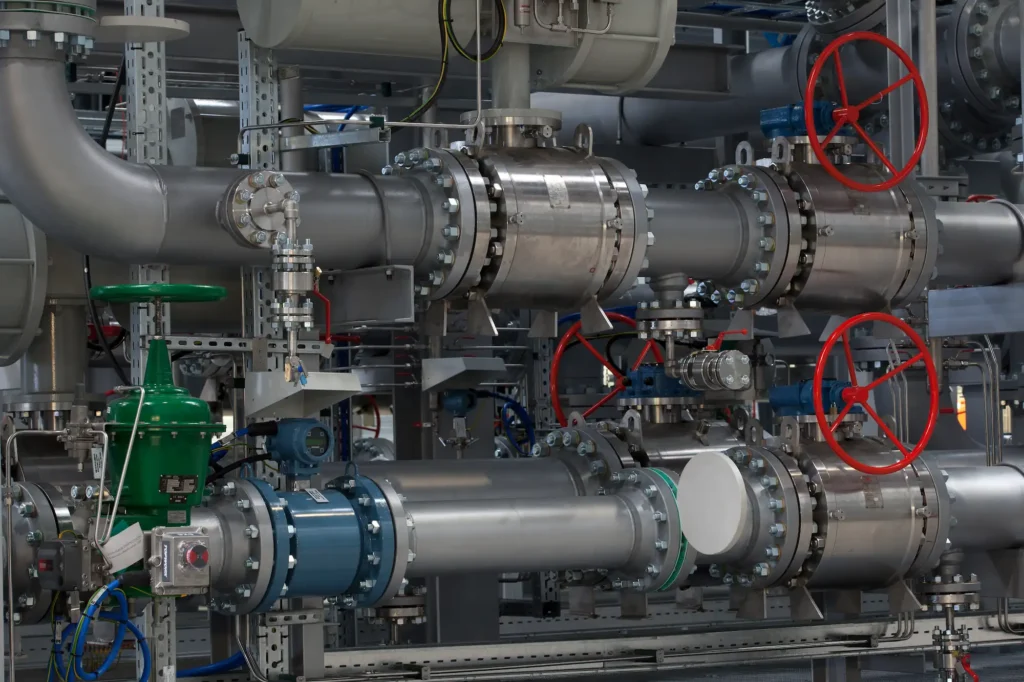
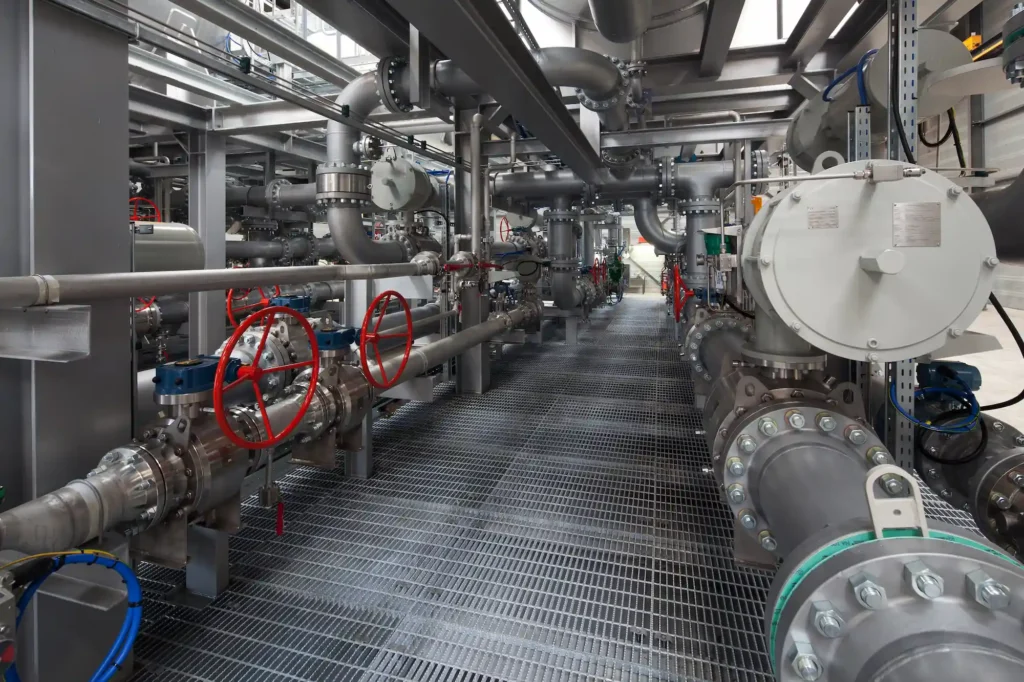
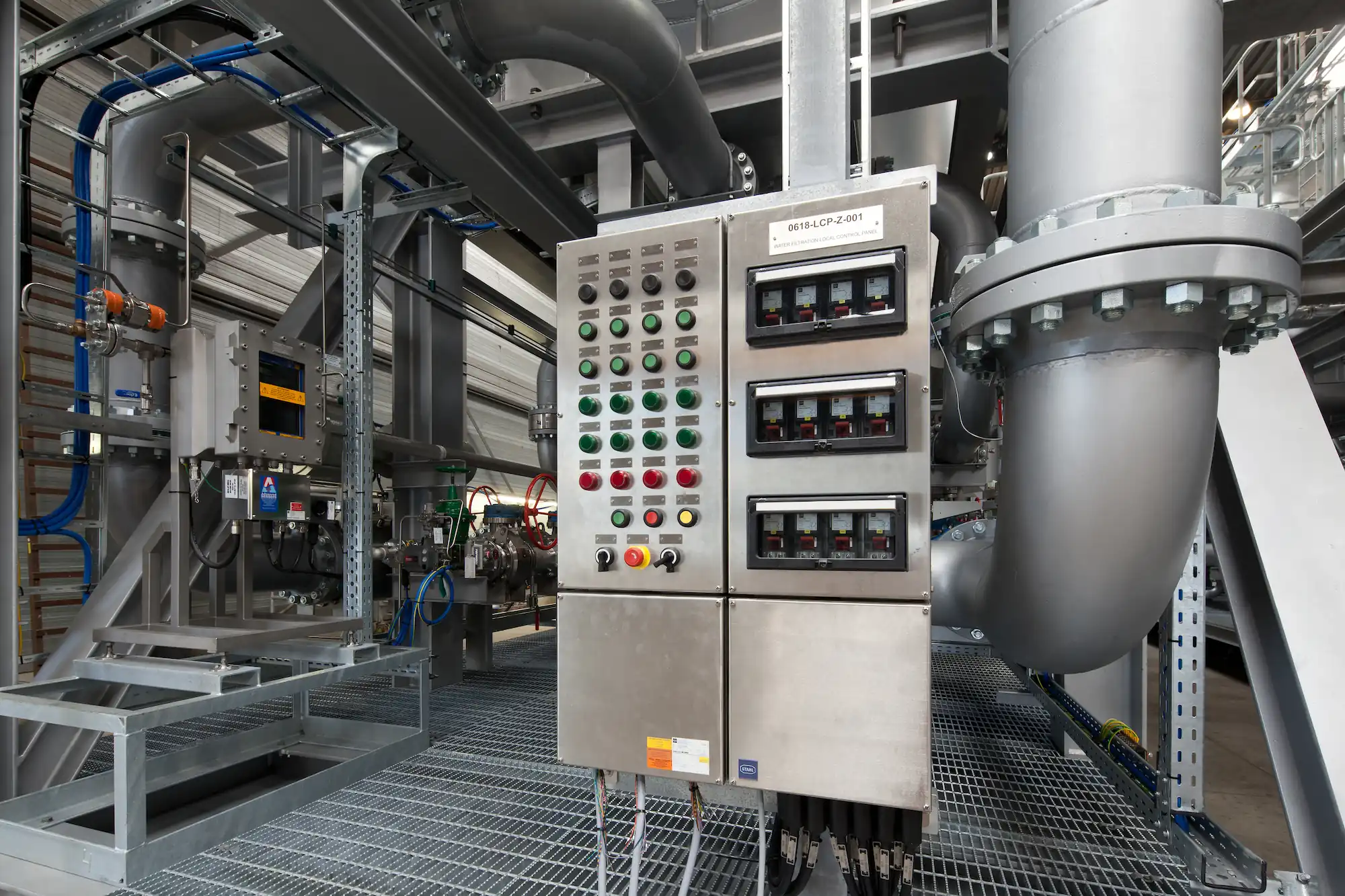
FB Group partners with flue gas treatment technology providers to integrate their process designs into skid-mounted installations. As a system integrator with in-house engineering and fabrication capabilities, FB Group combines multiple treatment technologies-specified by the technology partner-into compact, factory-tested packages. Standardized treatment sequences reduce engineering time and project risk, while integrated modular designs minimize on-site installation requirements and commissioning timelines. The compact footprint proves particularly valuable where space constraints exist in power generation facilities, waste-to-energy plants, and industrial combustion operations.
Technology providers benefit from FB Group’s experience in building similar modular process installations for the energy sector-including gas conditioning, separation, and chemical treatment systems. Heat recovery components can be incorporated directly into skid designs, improving overall energy efficiency while maintaining treatment effectiveness. FB Group’s fabrication platform accommodates flexible technology selection based on specific fuel types, pollutant profiles, and regulatory frameworks-ensuring compliance across diverse jurisdictions including European Union EN-series standards and international clean-air regulations.
Partnership and industry benefits
For technology providers, FB Group’s modular fabrication platform offers a proven path from process design to industrial-scale deployment. Pre-engineered modular units provide regulatory compliance with reduced complexity compared to site-specific engineered systems. Factory acceptance testing in FB Group’s own facilities ensures performance verification before shipment. Technology partners retain control over process design and performance guarantees, while FB Group handles engineering, fabrication, and quality assurance. As environmental standards continue to tighten globally, this partnership model enables technology providers to scale their solutions efficiently across coal-fired power plants, natural gas facilities, municipal waste incinerators, and industrial heating applications.